
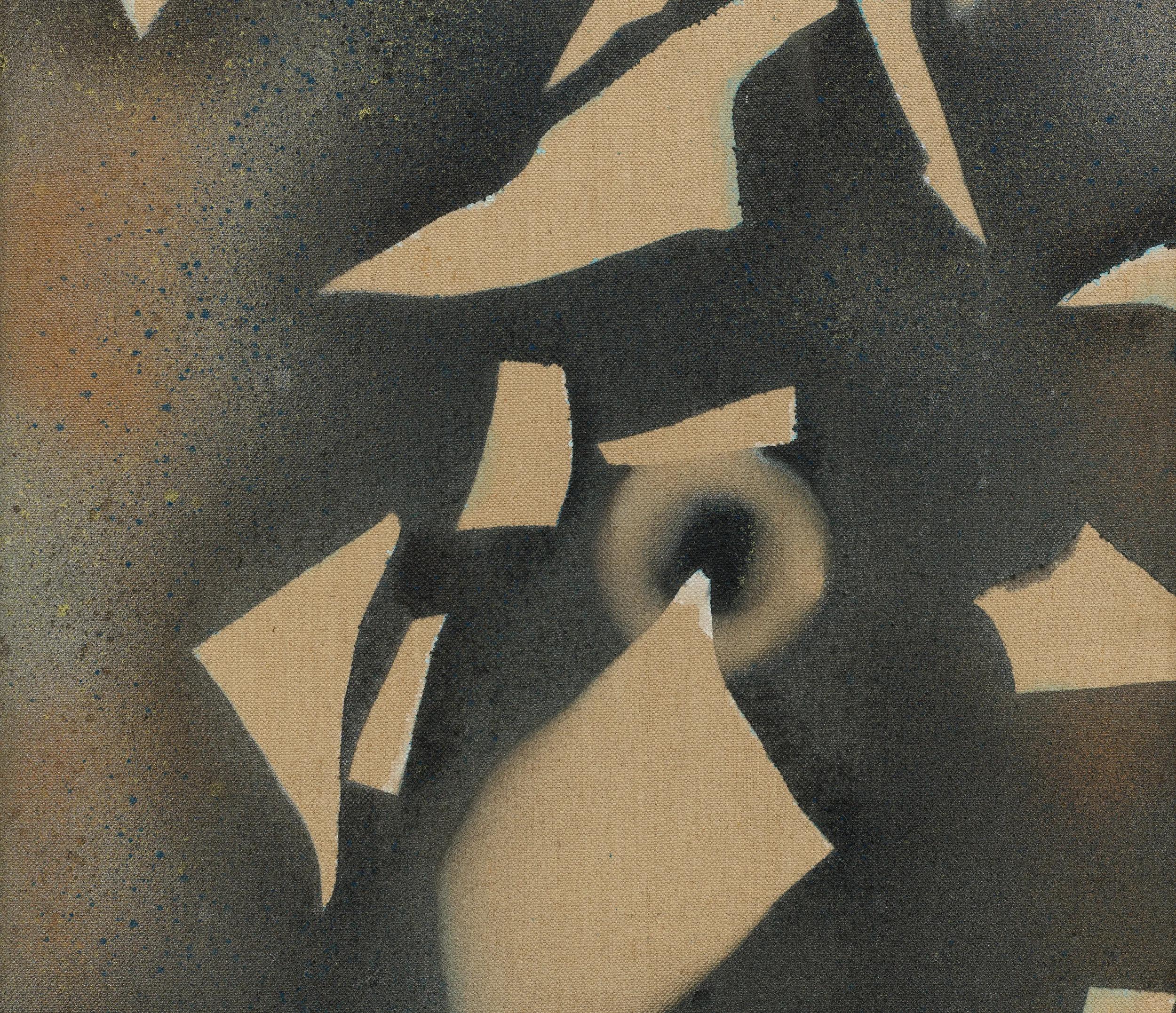
David Smith Spray Paintings, 1958 – 1964
17 September 2026 – 16 January 2027
West Hollywood
Dates
17 September 2026 – 16 January 2027
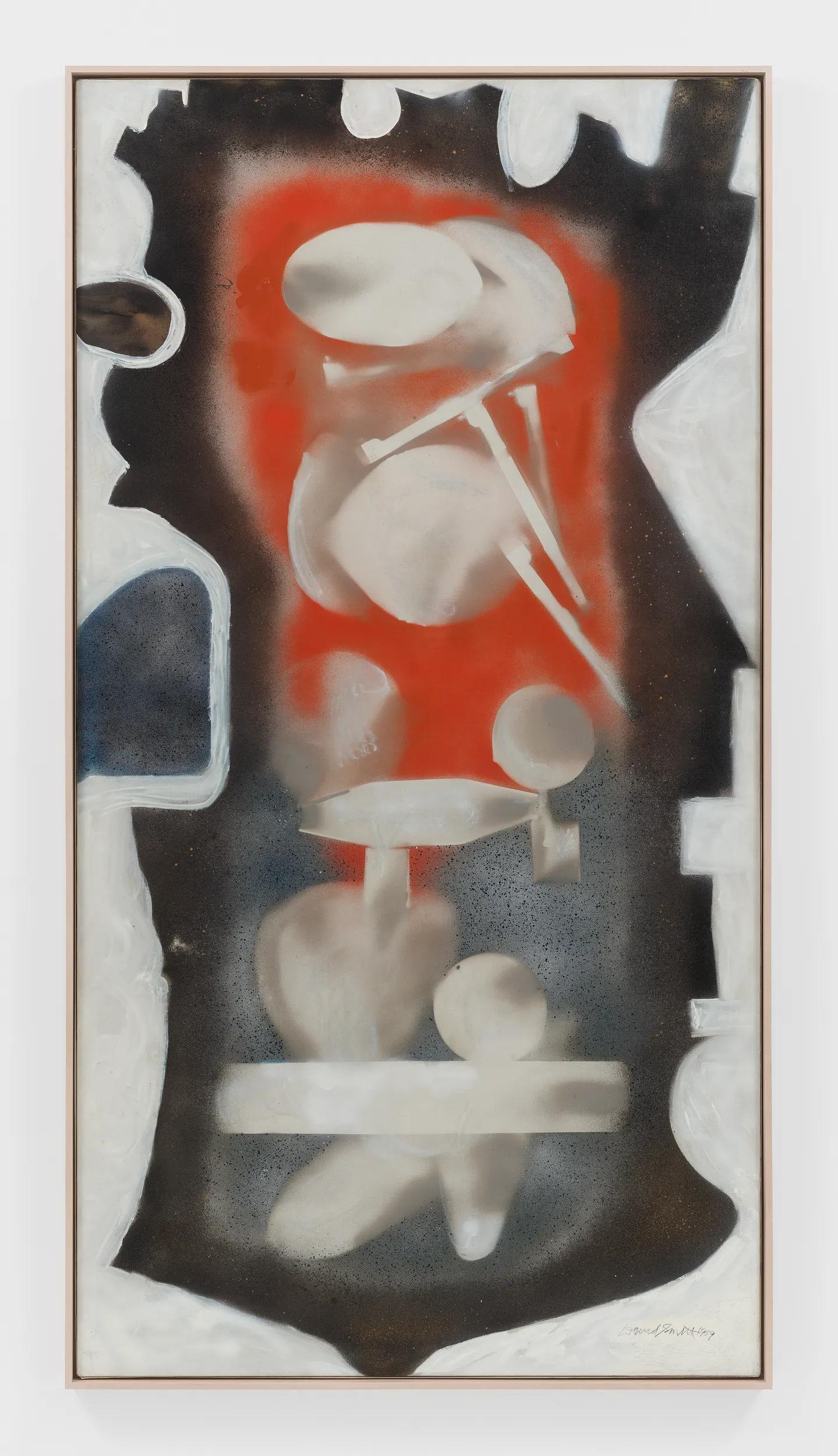
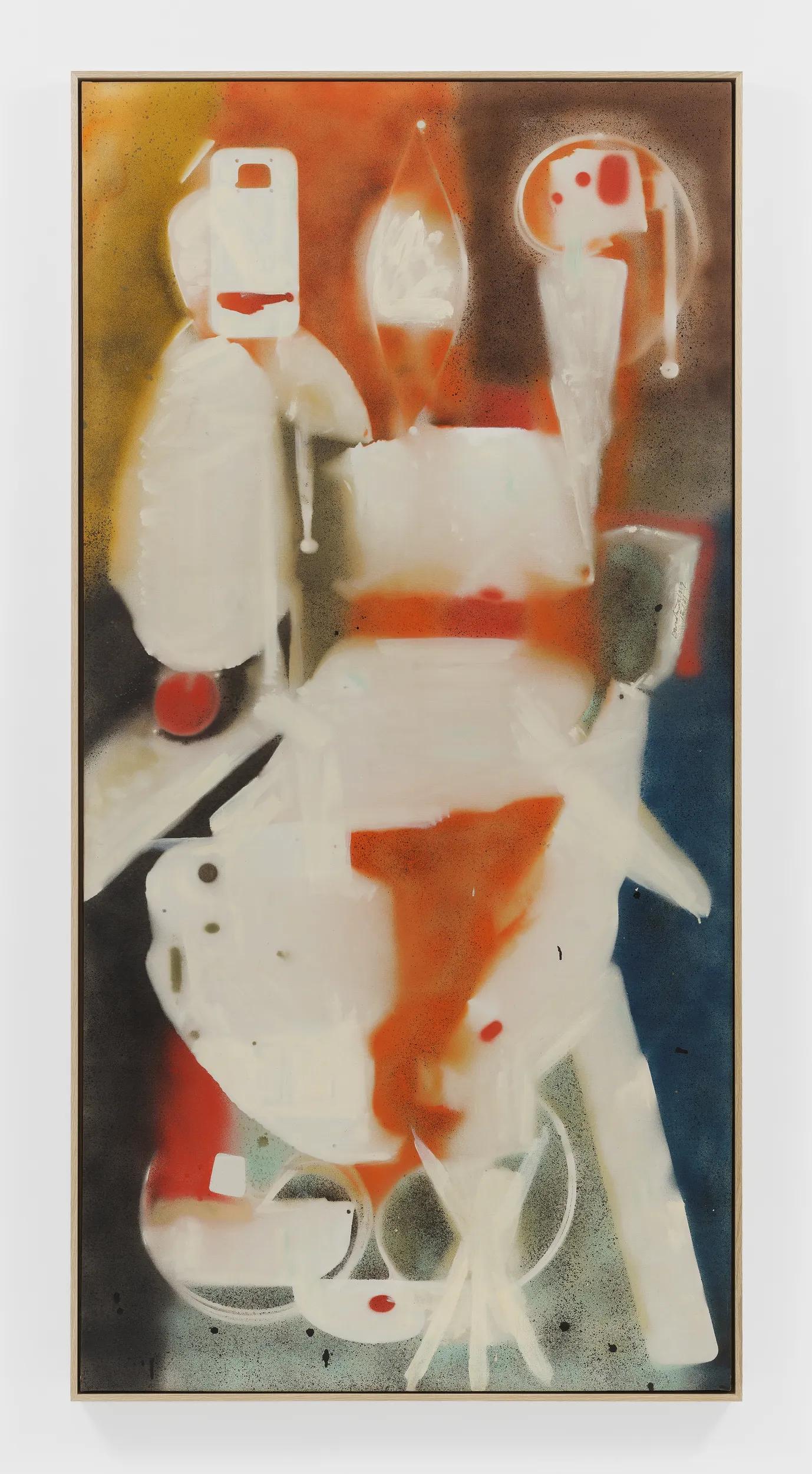
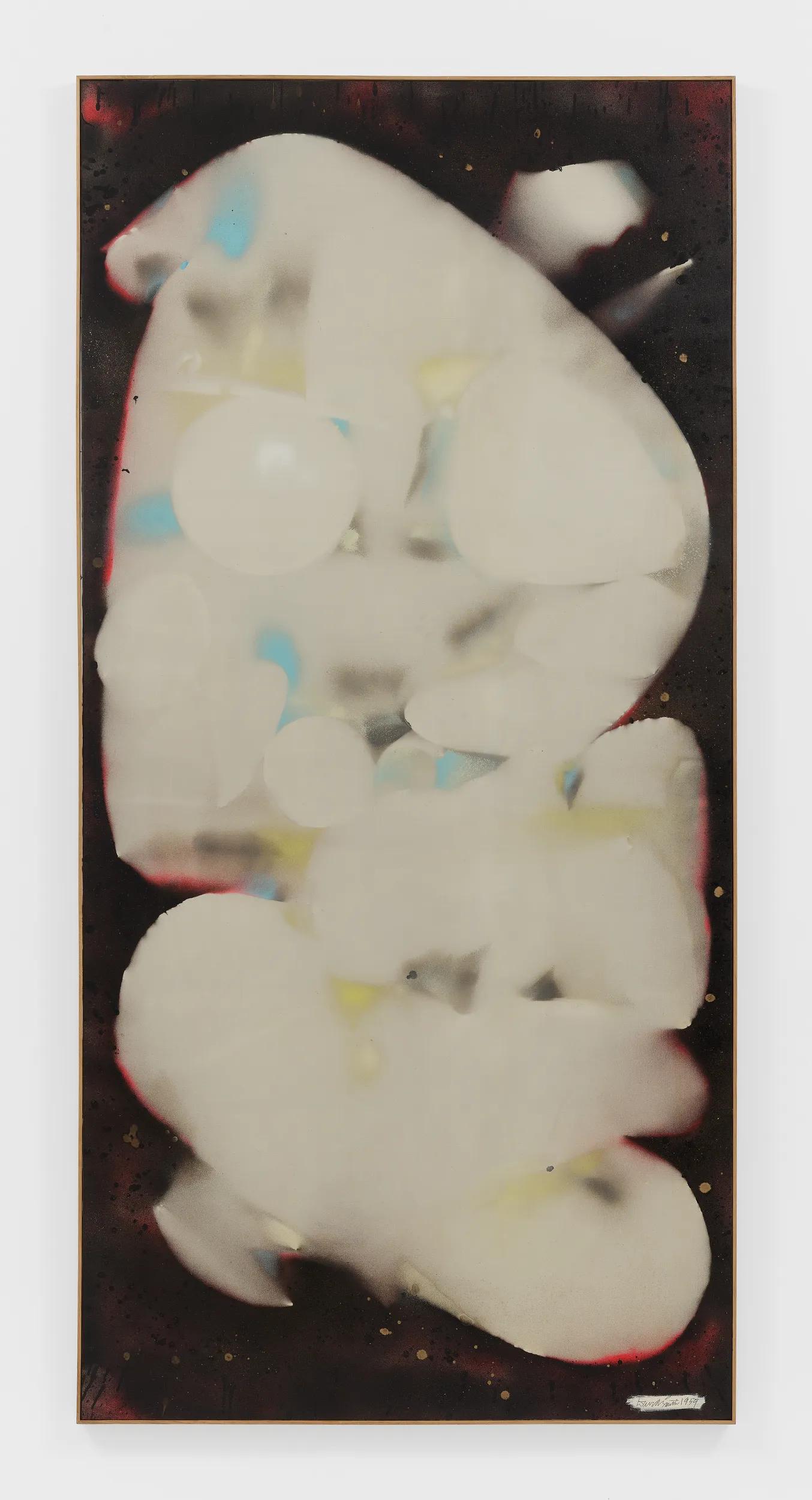
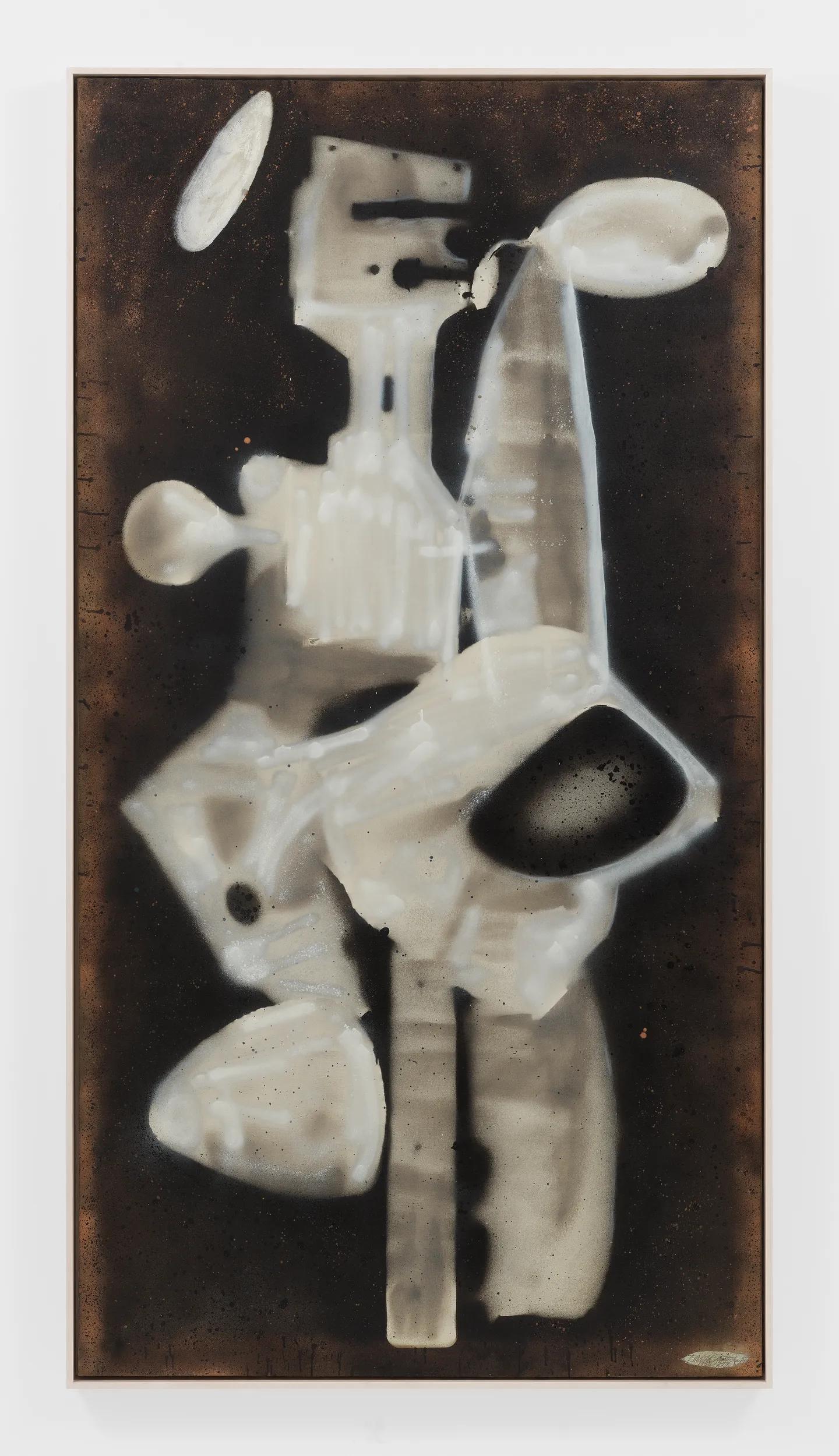
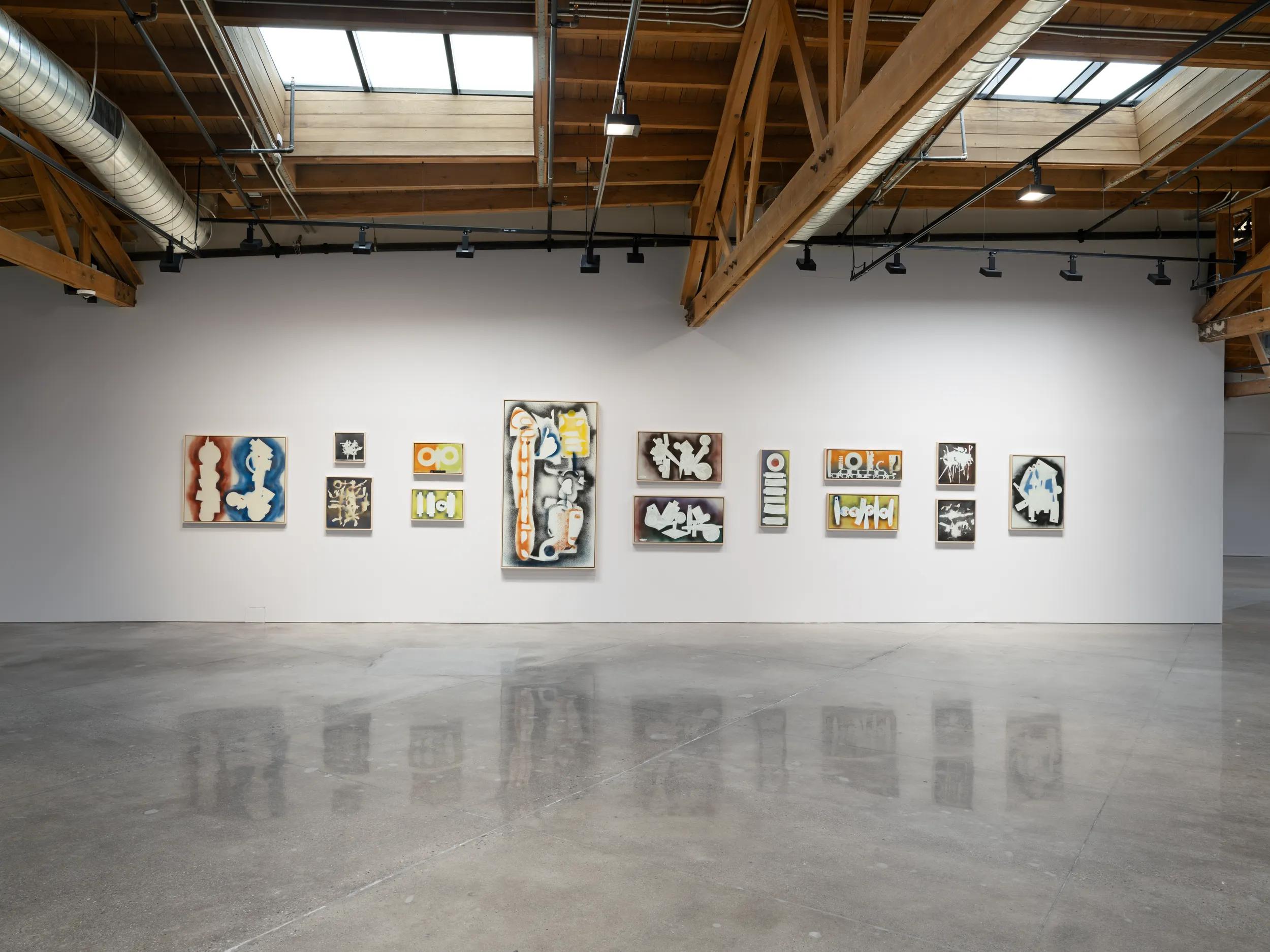
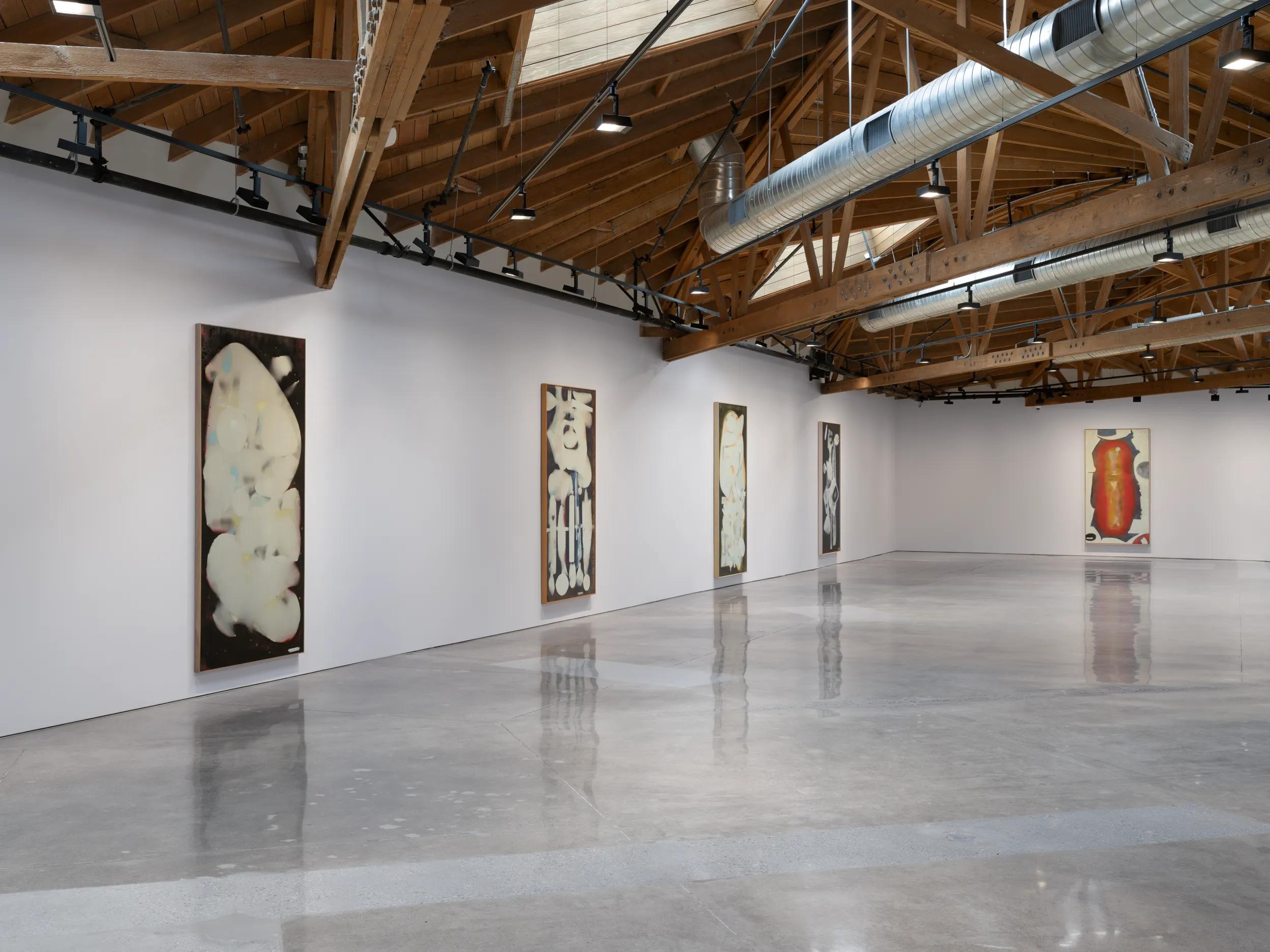
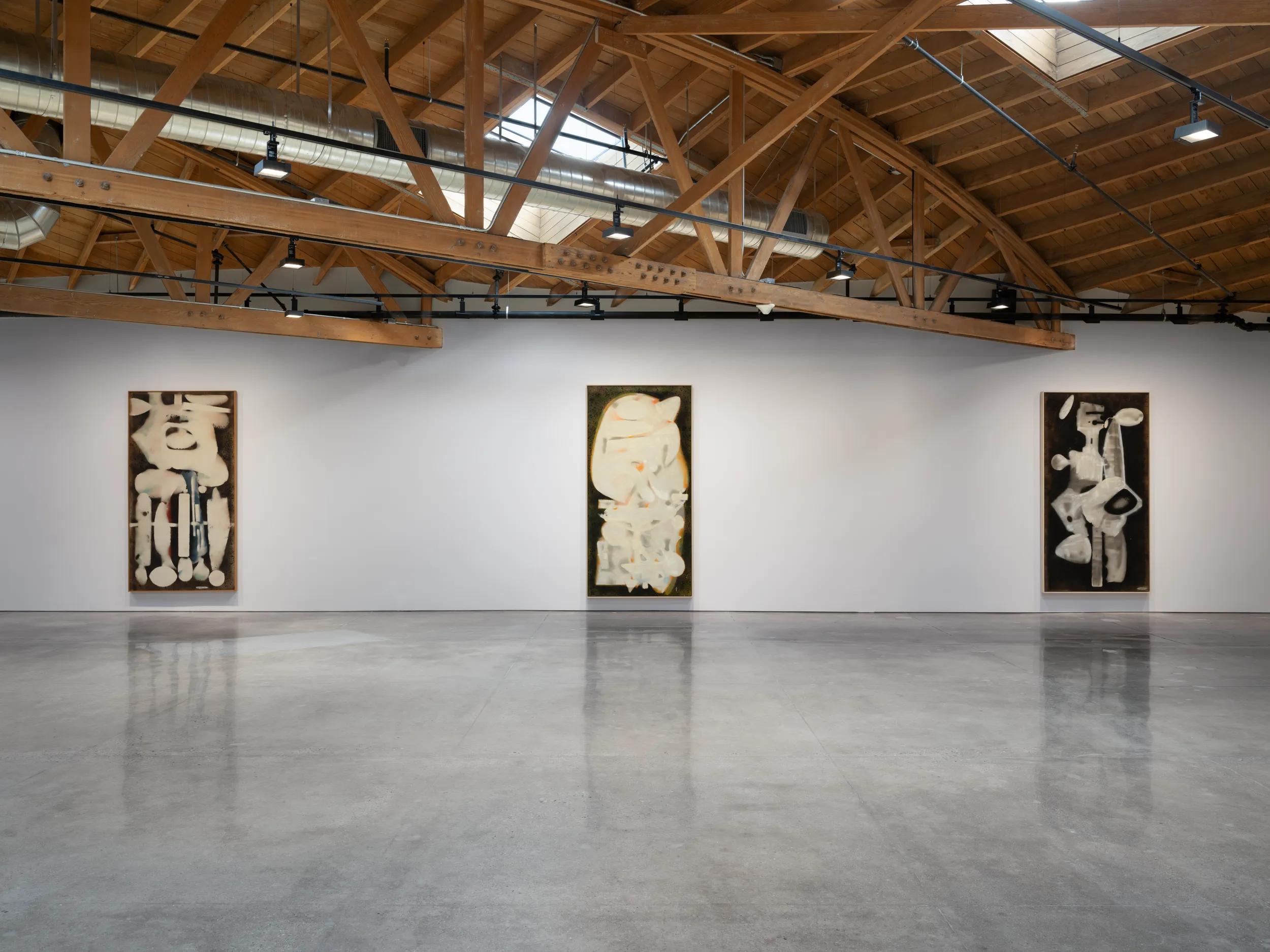
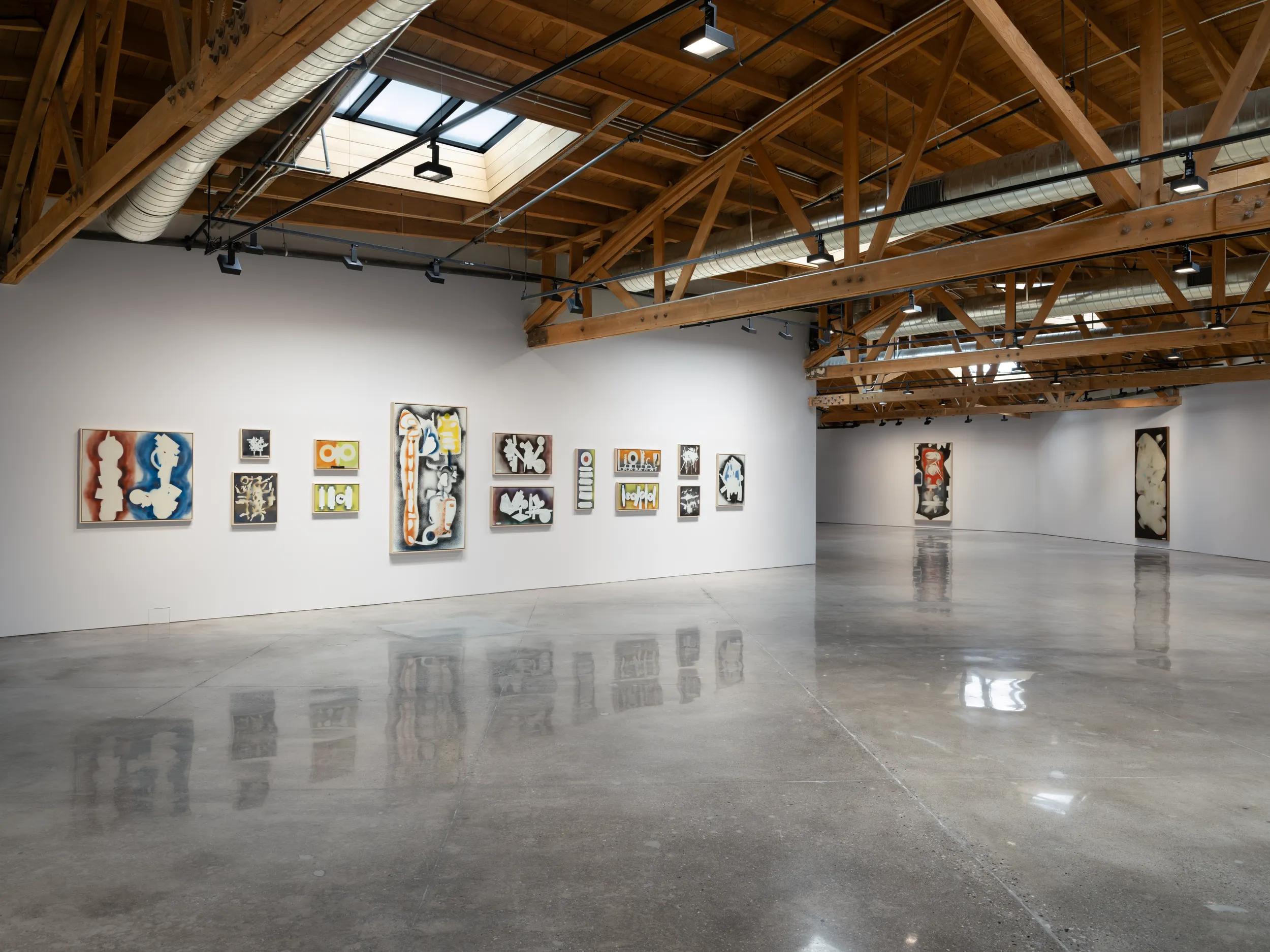
Long considered the sculptor most closely associated with abstract expressionism, David Smith (1906 – 1965) was in fact a restless polymath for whom sculpture, drawing and painting formed a single creative current—sculpting by day and working on canvas and paper by night. This fall, we're pleased to present ‘Night Window. David Smith Spray Paintings, 1958 – 1964,’ an exhibition devoted to his pioneering Sprays, seldom-seen two-dimensional works that embody the artist’s gift for daring, even startling innovations of form and color, space and time, in every medium he chose.
Though he initially trained as a painter at the Art Students League in New York, much of Smith’s education took place on the factory floors of automobile and locomotive plants, where he acquired a hands-on mastery of metal that would make him the first known American artist to weld steel into sculpture. Through those experiences he came to view fabricated metal parts as inherently abstract forms freed from function, waiting to be transfigured. That perspective would redefine the cultural and material possibilities of sculpture over his 33-year career.
The Sprays emerged unexpectedly from Smith’s sculpture-making. As he assembled metal components on whitewashed sections of his shop floor, his welding process left scorched silhouettes on the ground beneath. Recognizing new artistic possibility in these traces, he began arranging scraps of metal, paper and found materials on canvas, then coating the surface with commercial spray enamel—an industrial material with no precedent in fine art. He would often return to the compositions with white paint to heighten contrast and sharpen the interplay of elements.
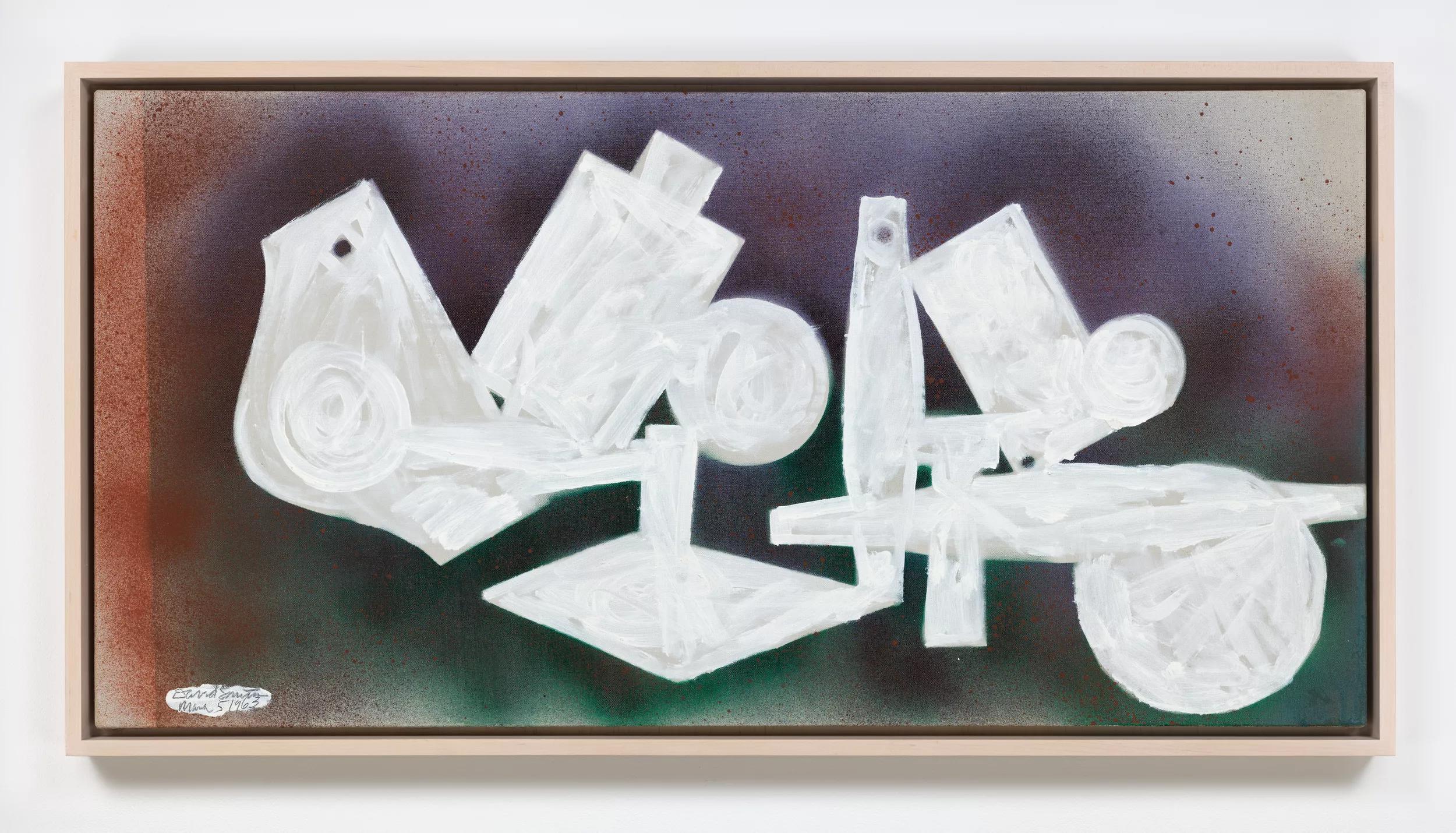
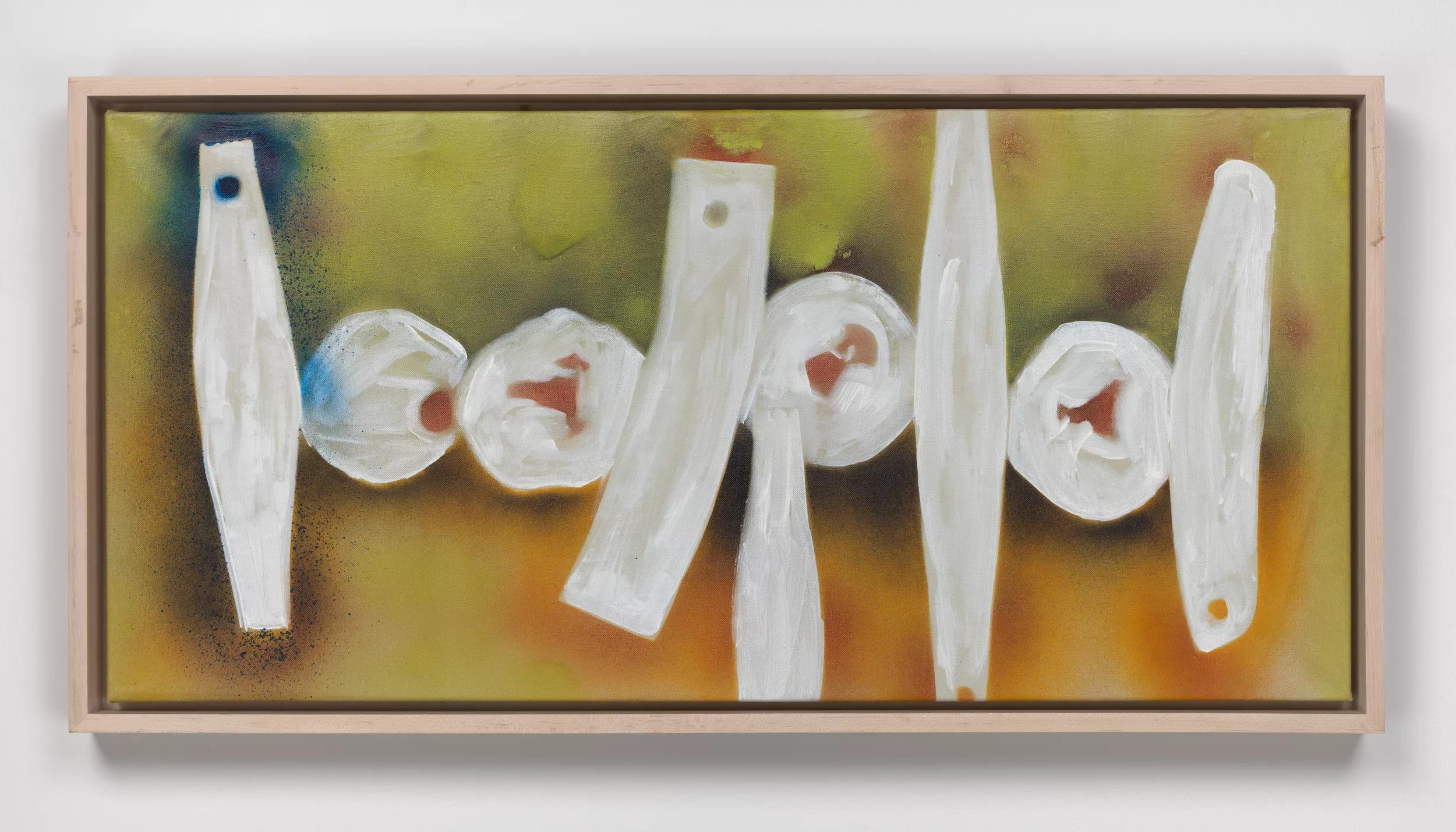
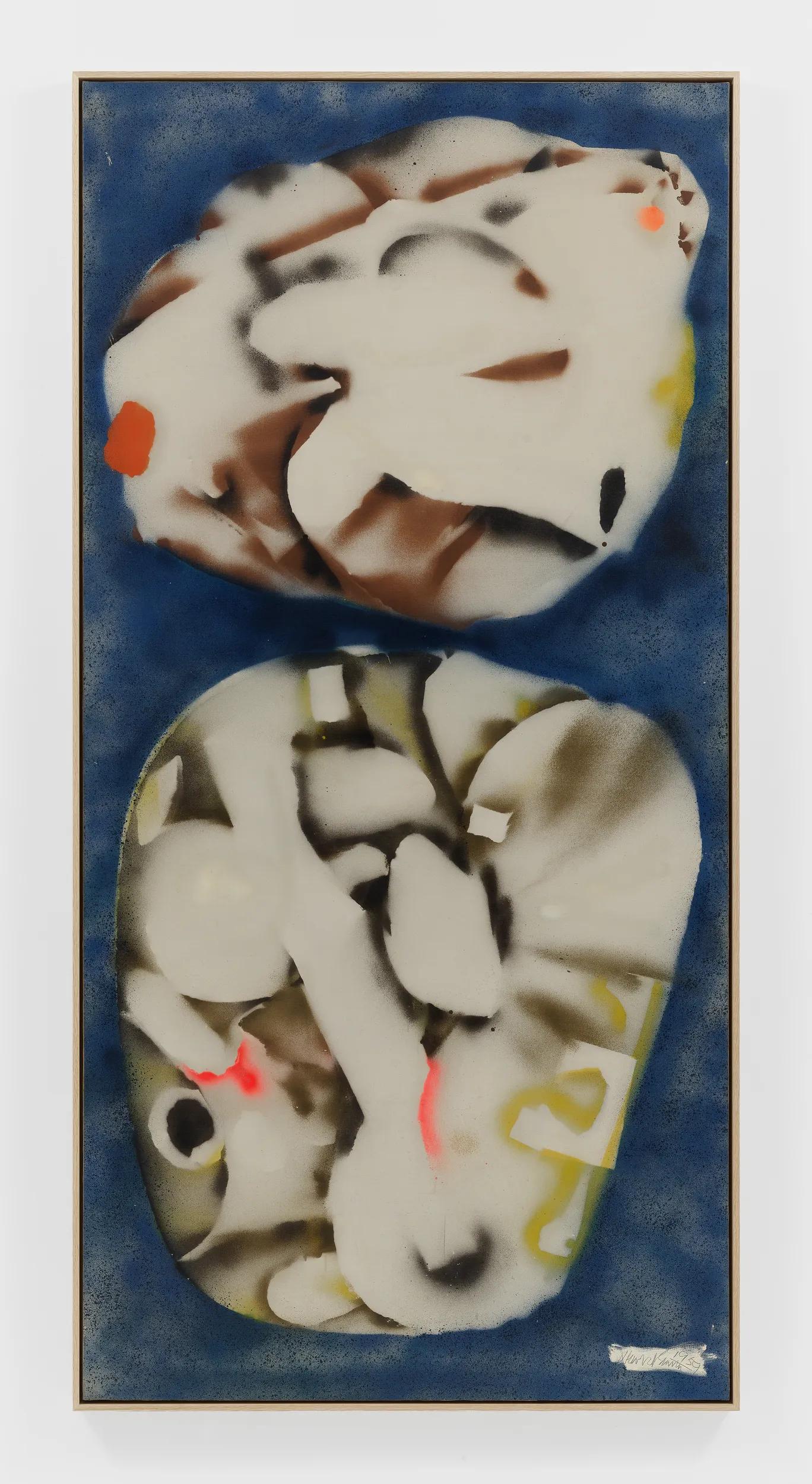
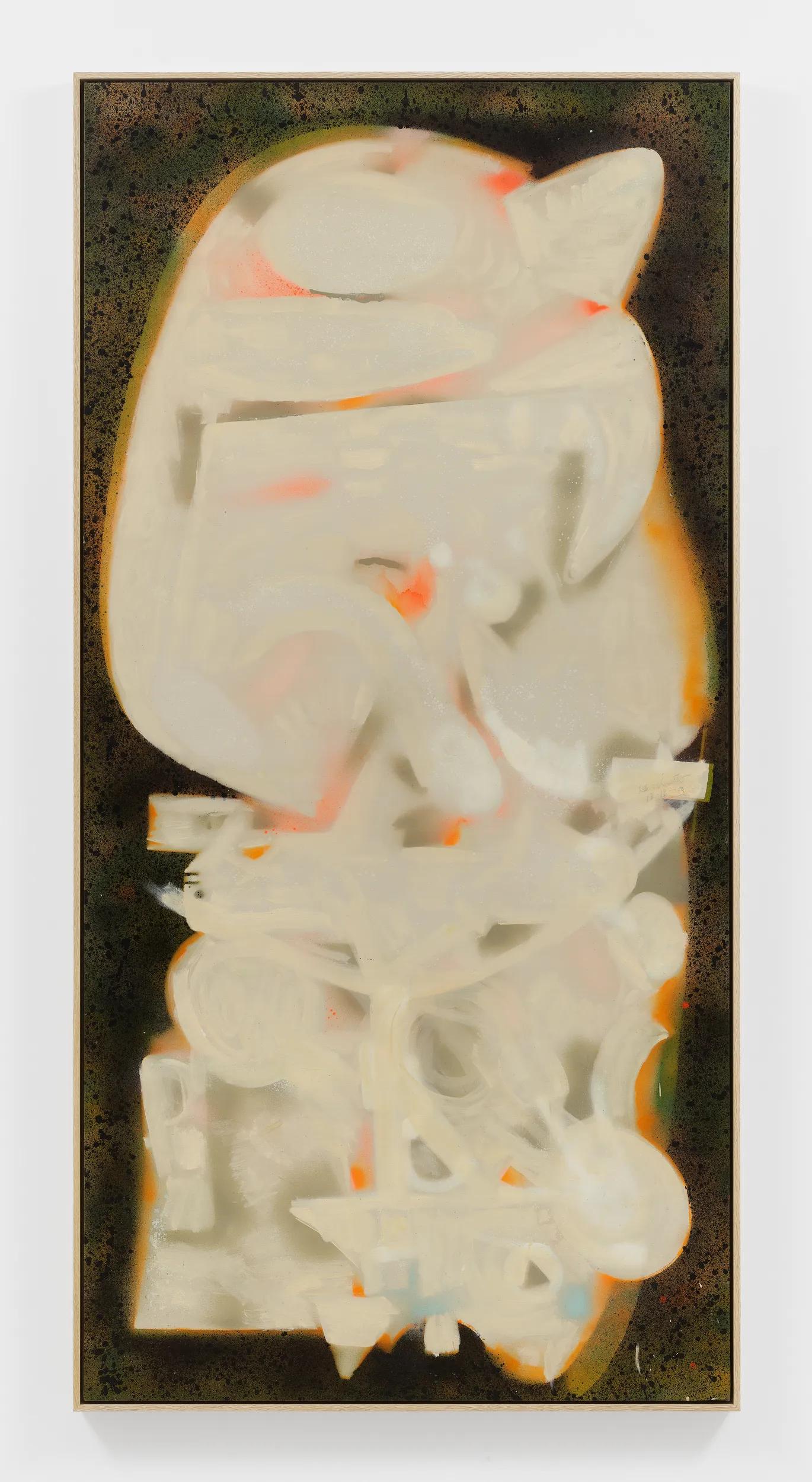
Installation Views
1 / 3
Related Content
About the Artist
David Smith
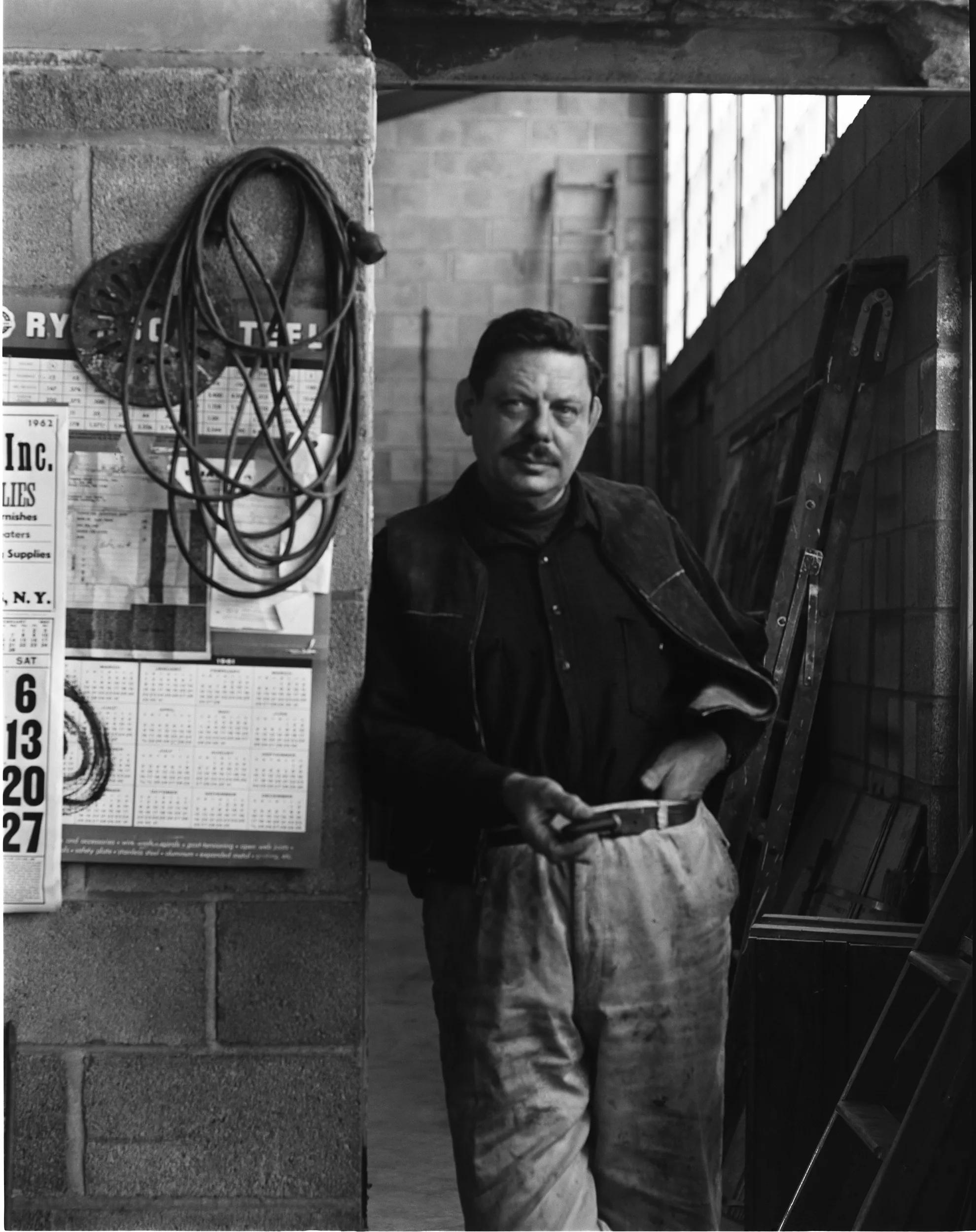
David Smith is regarded as one of the most innovative artists and important American sculptors of the 20th century. He transformed sculpture by rejecting the traditional methods of carving and casting in favor of torch-cutting and welding, becoming the first artist known to make welded sculpture in America. These methods allowed him to work in an improvisational manner in creating open and large-scale, abstract sculptures. In his later years, he installed his sculptures in the fields of his home in the Adirondack Mountains, where a dialogue between the art object and nature emerged as central to his practice. His sculpture-filled landscape inspired Storm King Art Center and other sculpture parks throughout the world, as well as anticipating the land and environmental art movements.
Smith was born in 1906 in Decatur, Indiana. He worked briefly as a welder in an automobile factory before moving to New York City to become an artist in 1926. He studied painting at the Art Students League, where Cubism and Surrealism were foundational to his practice. He began welding sculpture around 1933 after seeing reproductions of constructed steel sculptures by Pablo Picasso and Julio González. He later became associated with the abstract expressionist movement and paved the way for minimalism with radically simplified, geometric works. Painting and drawing remained integral to what Smith called his ’work stream’. He embraced a holistic attitude toward artmaking and dismissed the idea of a separation between mediums. Acknowledging the tradition of painted sculpture throughout art history and drawing from the bold palettes of modernism and pop culture, Smith often painted his sculptures. Smith died in 1965, leaving behind an expansive, complex, and powerful body of work that continues to exert influence upon subsequent generations of artists.
Smith began exhibiting his work as early as 1930. His first survey was organized by the Museum of Modern Art, New York in 1957. His sculpture was represented by the United States at the São Paulo Biennale in 1951 and at the Venice Biennale in 1954 and 1958. Posthumous retrospectives have been held at the Solomon R. Guggenheim Museum (1979 and 2006, which traveled to Tate Modern, London and the Centre Pompidou, Paris) and at the Los Angeles County Museum of Art (2011, which traveled to the Whitney Museum of American Art, New York and the Wexner Center for the Arts, Columbus, Ohio). Other major surveys have been organized at the Sezon Museum of Art, Tokyo (1994, traveled throughout Japan), the Museo Nacional Centro de Arte Reina Sofía, Madrid (1996), Storm King Art Center (1997–99), and Yorkshire Sculpture Park, Wakefield, UK (2019–20). A three-volume, fully illustrated catalogue raisonné of Smith’s sculpture was published in 2021 by the Estate of David Smith and distributed by Yale University Press. A biography by Michael Brenson, David Smith: The Art and Life of a Transformational Sculptor, was published by Farrar, Straus, and Giroux in 2022.
Current Exhibitions


1 / 11