
Opening Reception
12 December, 6 – 8 PM
Dates
12 December 2026 – 27 March 2027
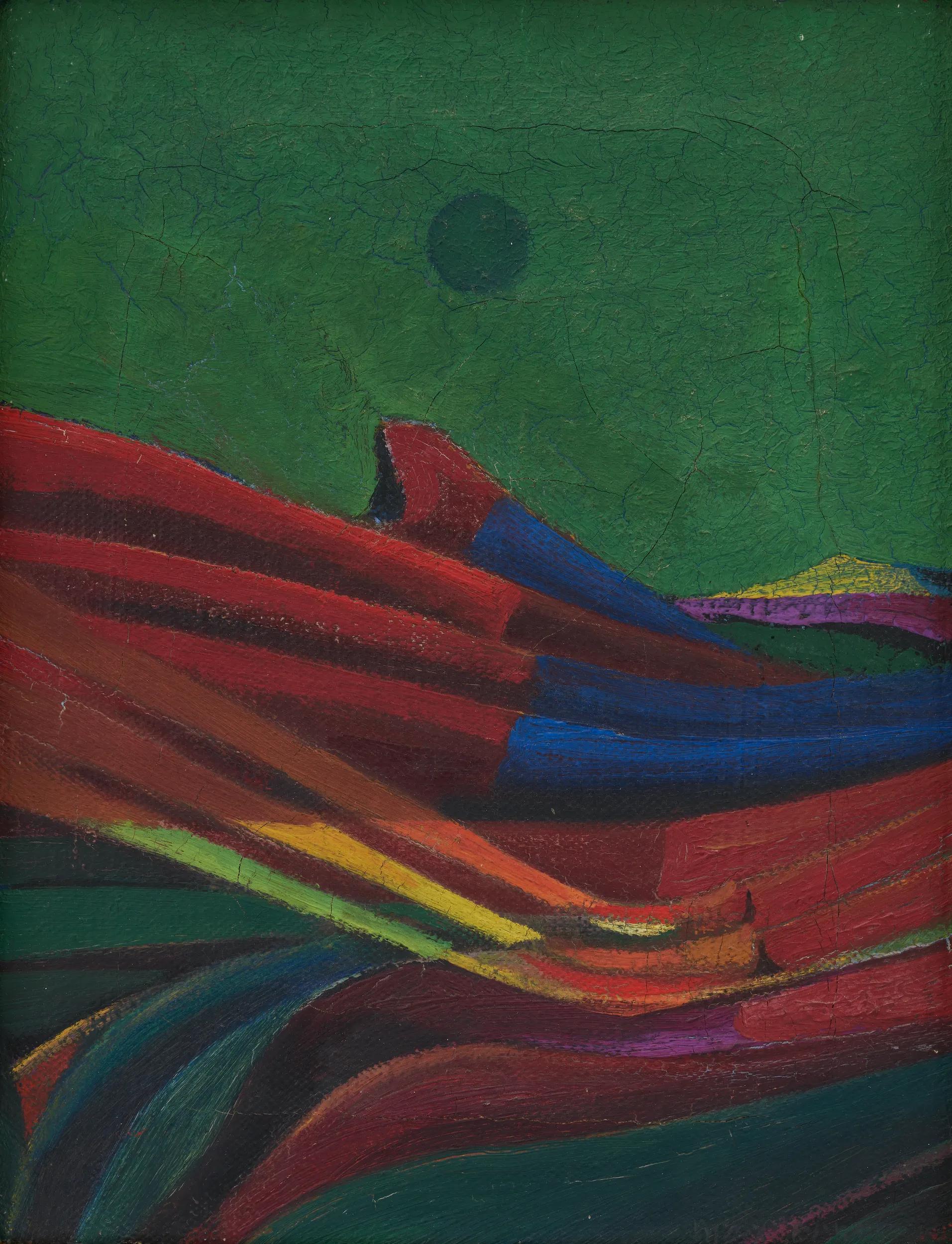
Hauser & Wirth St. Moritz’s upcoming exhibition ‘Max Ernst. Deep Time’ takes as its point of departure a formative stay in the Engadin in 1935 with his friend Alberto Giacometti.
Ernst (1891 – 1976) first encountered Giacometti (1901 – 1966) in Paris in 1929, and their bond strengthened after the Surrealists invited Giacometti to join them in 1930. Though the Surrealists broke with Giacometti in 1935, that summer he invited Ernst to his mother’s ancestral home in Maloja, in the Swiss Engadin. The two collected granite stones near the Forno Glacier. Before leaving, Ernst had carved or painted about twenty, writing to the art historian Carola Giedion-Welcker: ‘While the nations are clashing in Geneva, Alberto and I are in the throes of sculptural fever. We are working on blocks of granite from the moraines of the Forno Glacier. Wonderfully polished by time, ice, and weather, they already look fantastic. The human hand cannot compete.’
The reference to Geneva was pointed: the League of Nations was meeting there as Fascist Italy prepared to invade Abyssinia, a crisis widely reported in Europe. Ernst juxtaposed this political crisis—threatening to remake Europe and Africa—with the vastly slower forces of ice, weather, and time that had shaped the stones. His comment that the ‘human hand’ could not ‘compete’ was equally telling. Ernst understood the glacier as a supreme sculptor, its work unfolding over immense stretches of time, on a scale that rendered the upheavals of human civilization—and the very notion of individual creative power—little more than fleeting phenomena. Far from constituting an isolated body of work, the Maloja stones gave new form to an outlook already deeply embedded in his art: a propensity to find affinities between image-making and geological processes.
Related Content
Current Exhibitions




1 / 12