
Welcoming Nathanaëlle Herbelin to Hauser & Wirth
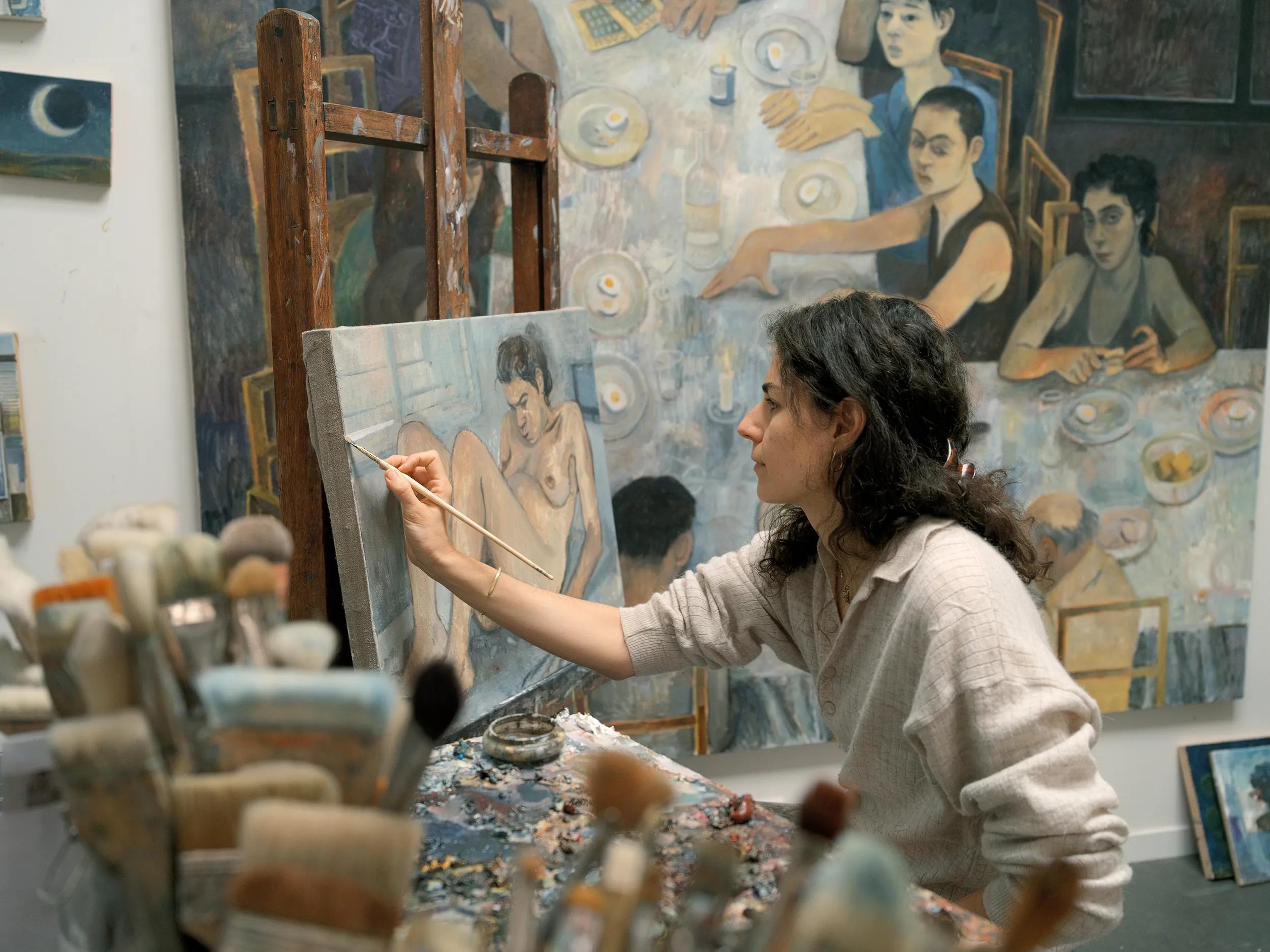
Nathanaëlle Herbelin © Nathanaëlle Herbelin / ADAGP, Paris. Photo: Milena Villalon
Welcoming Nathanaëlle Herbelin to Hauser & Wirth
We are pleased to announce representation of artist Nathanaëlle Herbelin in collaboration with Xavier Hufkens.
Based in Paris, Nathanaëlle Herbelin (b. 1989, Tel Aviv) has attracted acclaim for paintings that transform landscapes, portraits and still life into incandescent visual poems about the timeless themes of home, loneliness, love, friendship, trauma and random encounters that have imprinted after-images on the artist’s mind and heart. While Herbelin’s distinctive pictorial language is narrative and immediate, its impact is that of a persistent, recurring feeling brought on by a memory. In her words, ‘Everything that provokes an emotion for me is paintable and more than that —everything can become a painting if I give it an emotion.’ The engine of her art is a profound humanism: in their particulars, her intimately observed scenes resonate with complexities and contradictions that connect them to the life experience of others.
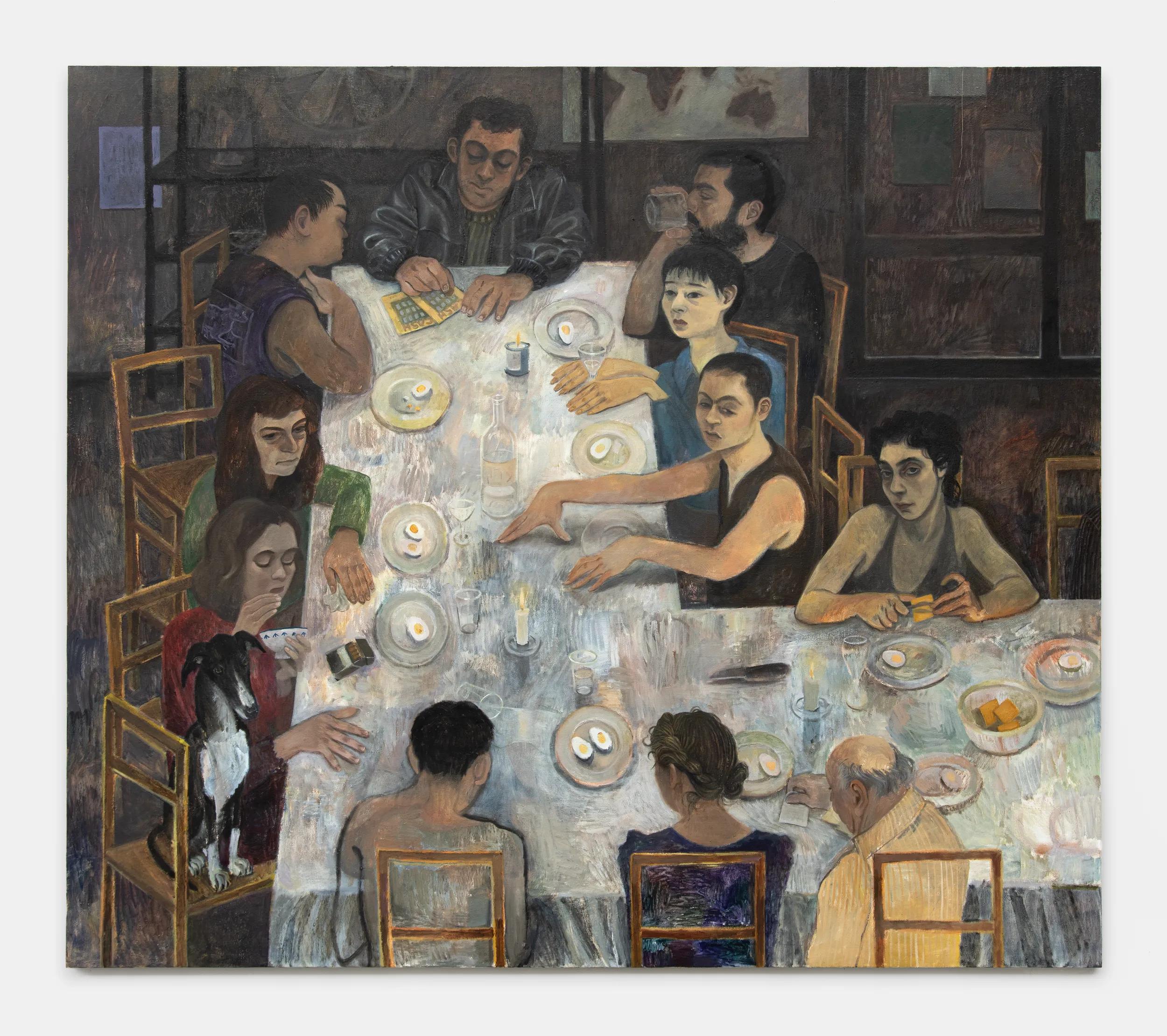
Nathanaëlle Herbelin, Dîner aux oeufs durs, 2024 – 2025 © Nathanaëlle Herbelin / ADAGP, Paris
Herbelin’s portraits of friends, family, strangers, domestic interiors, landscapes and objects allude to questions about individuality and belonging. Spanning the deceptively mundane and the unquestionably extraordinary, from fleeting romances and moments of grief and loss, to the colors and shapes of dramatically different terrains and the most tender interludes of motherhood and partnership, they exert the conjuring power of ex-votos: poignant and devotional, they frame a sacred space where hope, pain, love and strength combine in a call to the sublime. Meanwhile, with radical candor, Herbelin reveals her process and the evolution of certain works through ghostly shadows and pentimenti that show through the top layers of the paint, using oils on canvas or wood to open doors between the personal and the universal.
Marc Payot, President, Hauser & Wirth, says: ‘We are thrilled to welcome Nathanaëlle Herbelin to Hauser & Wirth, and are honored to work in collaboration with Xavier Hufkens. We also want to acknowledge the invaluable guidance Philippe Jousse has given the artist over the past decade, and look forward to building upon that. Nathanaëlle’s work achieves an exquisite kind of balancing act between the most delicately private and recognizably universal human experiences. It speaks to us about what it means to exist wholeheartedly in a fragile world. Her themes —female agency, emotional longing, the poles of individuality and communality, the beauty and challenge of nostalgia— connect her to such artists in our program as Nicole Eisenman, Ambera Wellmann and Louise Bourgeois, but also harken to a number of philosophical and aesthetic peers across history, from Fra Angelico and Nicolas Poussin to Lucian Freud and Alice Neel. We look forward to presenting her first exhibition with the gallery in Los Angeles in 2027, and to sharing her art with ever wider audiences in the years ahead.’
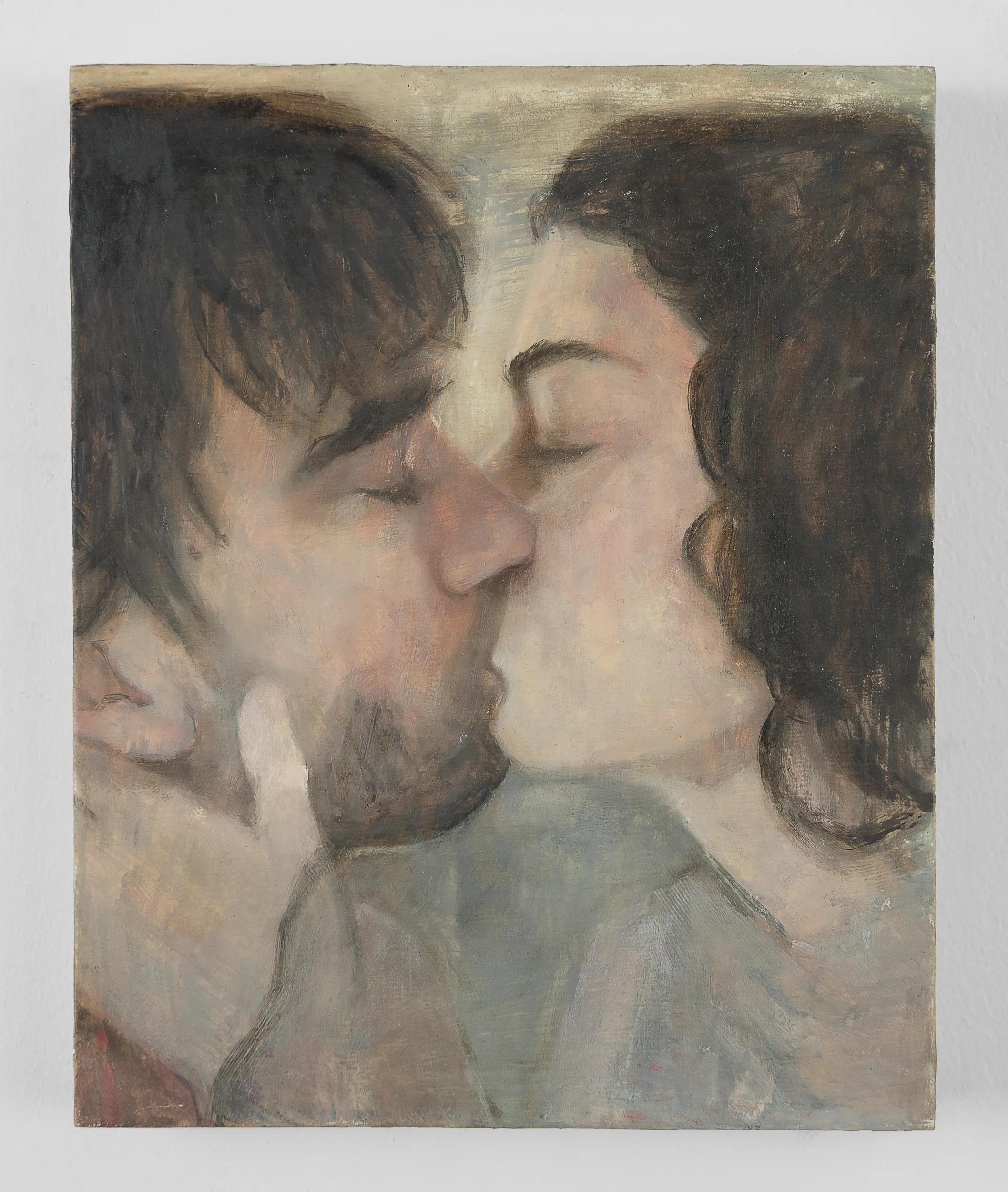
Nathanaëlle Herbelin, Le bisou, 2021 © Nathanaëlle Herbelin / ADAGP, Paris
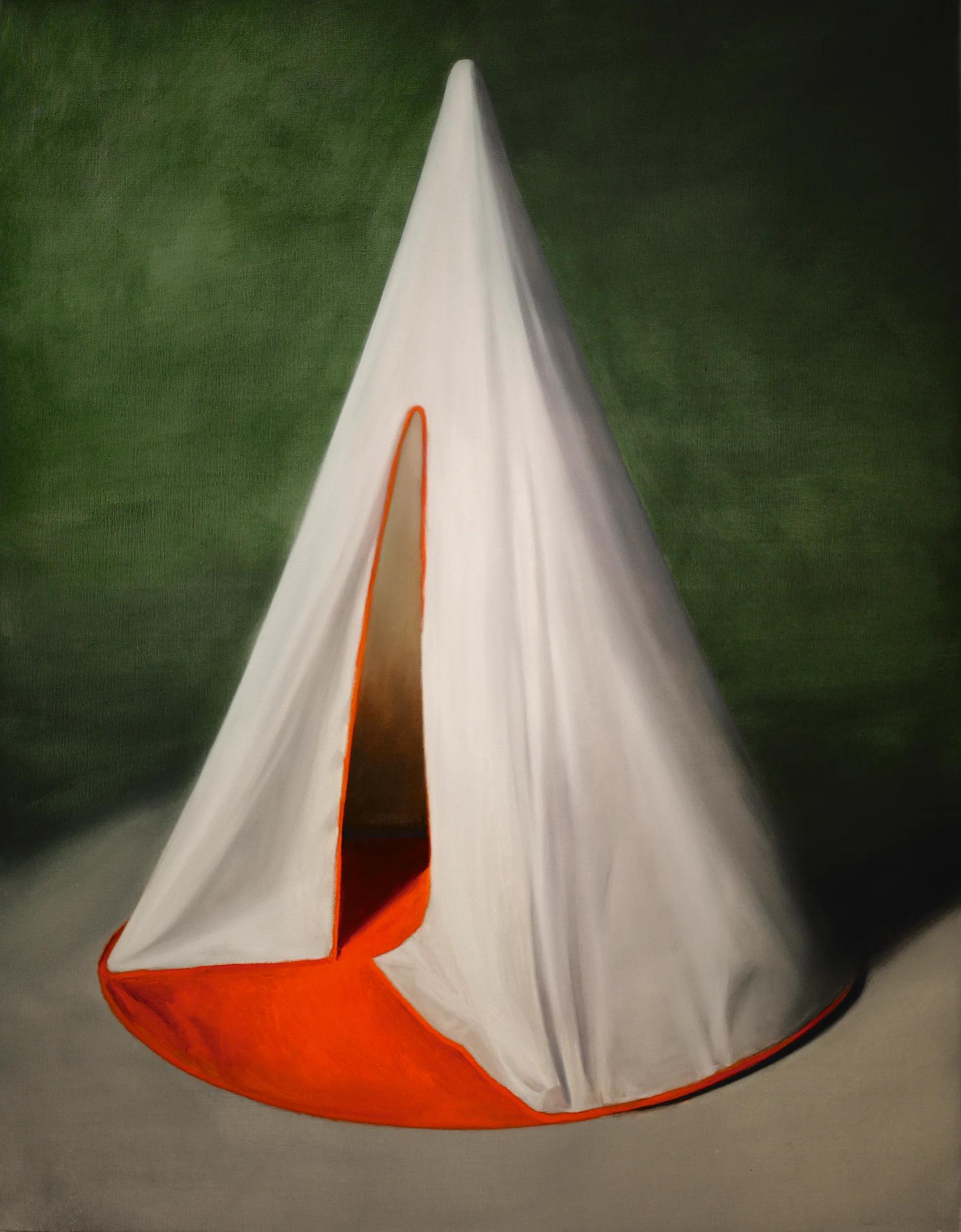
Nathanaëlle Herbelin, Tipi, 2014 © Nathanaëlle Herbelin / ADAGP, Paris
From 10 October 2026 until 31 January 2027, Herbelin’s work will feature in an exhibition entitled ‘A New Life Force’, alongside artists Kemi Onabulé and Megan Rooney, at MICAS (Malta International Contemporary Art Space), curated by Edith Devaney, Artistic Director, MICAS. One of her works will also be on view at Whitechapel Gallery in London for a 125th anniversary exhibition, ‘This must be the Place: Artists for Whitechapel Gallery’, opening 7 October 2026.
Herbelin was awarded the Matsutani Prize in 2019. Among Herbelin’s solo institutional exhibitions are ‘Feel the pulse’, He Art Museum, Shunde, (2025); ‘Être ici est une splendeur,’ Musée d’Orsay, Paris (2024); ‘À la surface, le fond de l’oeil,’ French Institute of Tel Aviv (2022); ‘Et peut-être que ces choses n’ont jamais eu lieu,’ Umm al-Fahem Palestinian Art Center (2021); ‘Devenir Peinture,’ Yishu 8 prize,George V Art Centre, Beijing (2021). Selected recent group exhibitions include ‘Visages d’artistes: De Gustave Courbet à Annette Messager’, Petit Palais, Paris (2026); ‘To Vincent. A Winter’s Tale’, Fondation Vincent Van Gogh, Arles (2025); ‘Copyists’, Centre Pompidou-Metz, Metz (2025); ‘GIRLS. On Boredom, Rebellion and Being In-Between’, MoMu, Antwerp (2025); ‘Love is Louder’, BOZAR, Brussels (2024); ‘L’ami.e modèle’, MUCEM Musée des civilisations de l’Europe et de la Méditerranée, in partnership with Fondation Pernod Ricard, Marseille (2022); ‘Entre tes yeux et les images que j’y vois’, Fondation Pernod Ricard, Paris (2022); ‘Il était une fois…’, FRAC Champagne-Ardenne (2021).
About Nathanaëlle Herbelin
Nathanaëlle Herbelin moved to Paris in 2011 to study at the École Nationale Supérieure des Beaux-Arts de Paris, receiving her MFA in 2016. During this time, she participated in an exchange program at The Cooper Union in New York, and has since completed residencies in New York, Beijing, Shunde, Mallorca, Paxos, Arad and Heiligenberg. Herbelin’s practice is shaped by her experience of living between places and cultures, making ideas of multiplicity, diversity and exchange recurrent themes of her work.
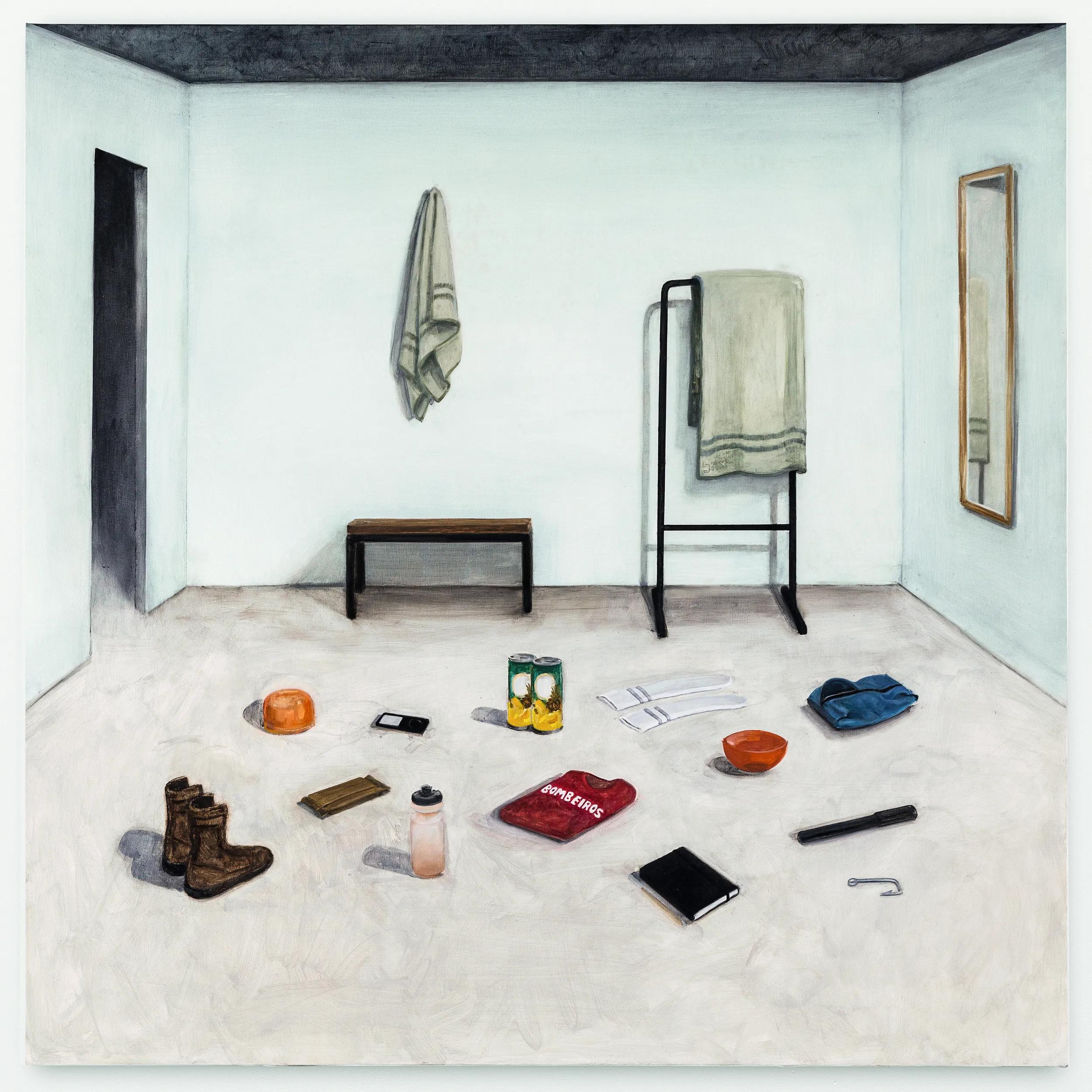
Nathanaëlle Herbelin, Yehonathan, 2019 © Nathanaëlle Herbelin / ADAGP, Paris
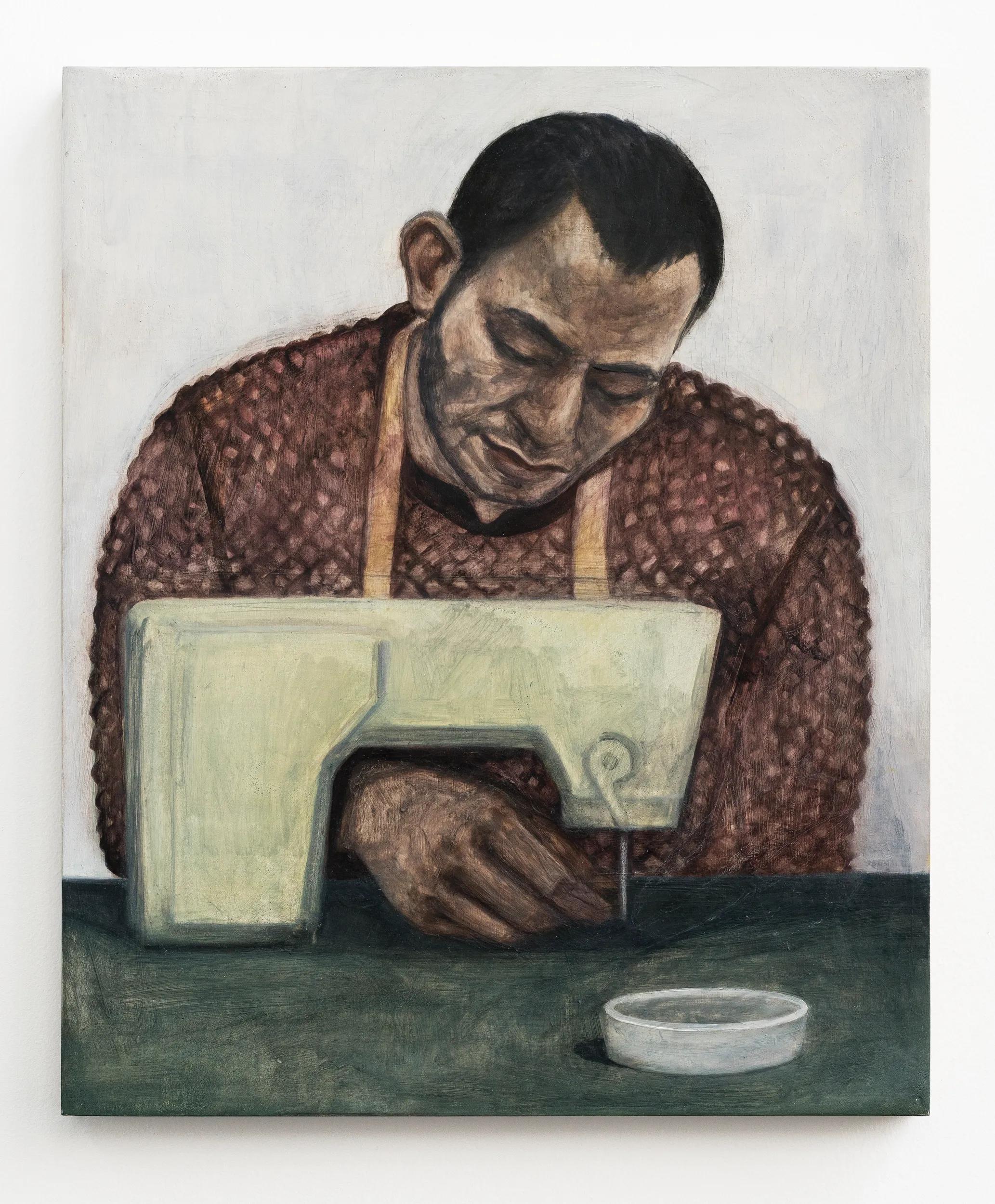
Nathanaëlle Herbelin, Ahmed, 2018 © Nathanaëlle Herbelin / ADAGP, Paris
At her 2016 graduate exhibition, Herbelin surprised her teachers and classmates by showing several portraits alongside the landscapes, interiors and still lifes that had dominated her practice throughout her studies. Portraits have since come to form the core of the artist’s practice, which she describes as ‘an act of synchronization’—the effort to understand her subjects so deeply that she might ‘merge with them for a moment.’ Painting at eye level, Herbelin invites close connection that encourages deep identification with the sitter, free of judgement or objectification. ‘I think gentleness allows any kind of enquiry,’ she explains. ‘I want to leave sufficient room for the gaze of the other, and that’s why I never paint in a completely realistic way.’ In this respect, the works find a balance between what is seen and what the artist wills us to perceive.
Her subjects range from those closest to her—her partner, daughter, sister and grandfather—to complete strangers encountered first in the street, on the metro or at the museum. On occasion such subjects are selected for their resemblance to a work of art, a historical figure or even a Fayum mummy portrait. Couples also frequently appear in Herbelin’s work, caught in moments of intimacy and domesticity that reveal the particularities of a shared life and mutual desire. Shortly after moving into portraiture, Herbelin began to paint nudes, drawn to the landscape of the unclothed body.
Alongside portraiture and groupings of figures, Herbelin paints interiors, landscapes and still lifes. The arrangement of objects is for her both a means of creating abstractions and an invitation to reverie and projection. Her quiet bedrooms, bathrooms and kitchens coax the viewer into a newly attentive relationship with the everyday world. Frequently, the absence of figures carries the greatest significance and power in these paintings, redolent of those who have gone or anticipating those who may arrive. Locations described in books such as Gabriel García Márquez’s ‘One Hundred Years of Solitude’ (1967) and Georges Perec’s ‘Les Choses’ (1965) appear, shaped by Herbelin’s imagination, as do scenes of her own studio, past apartments and domestic altars.
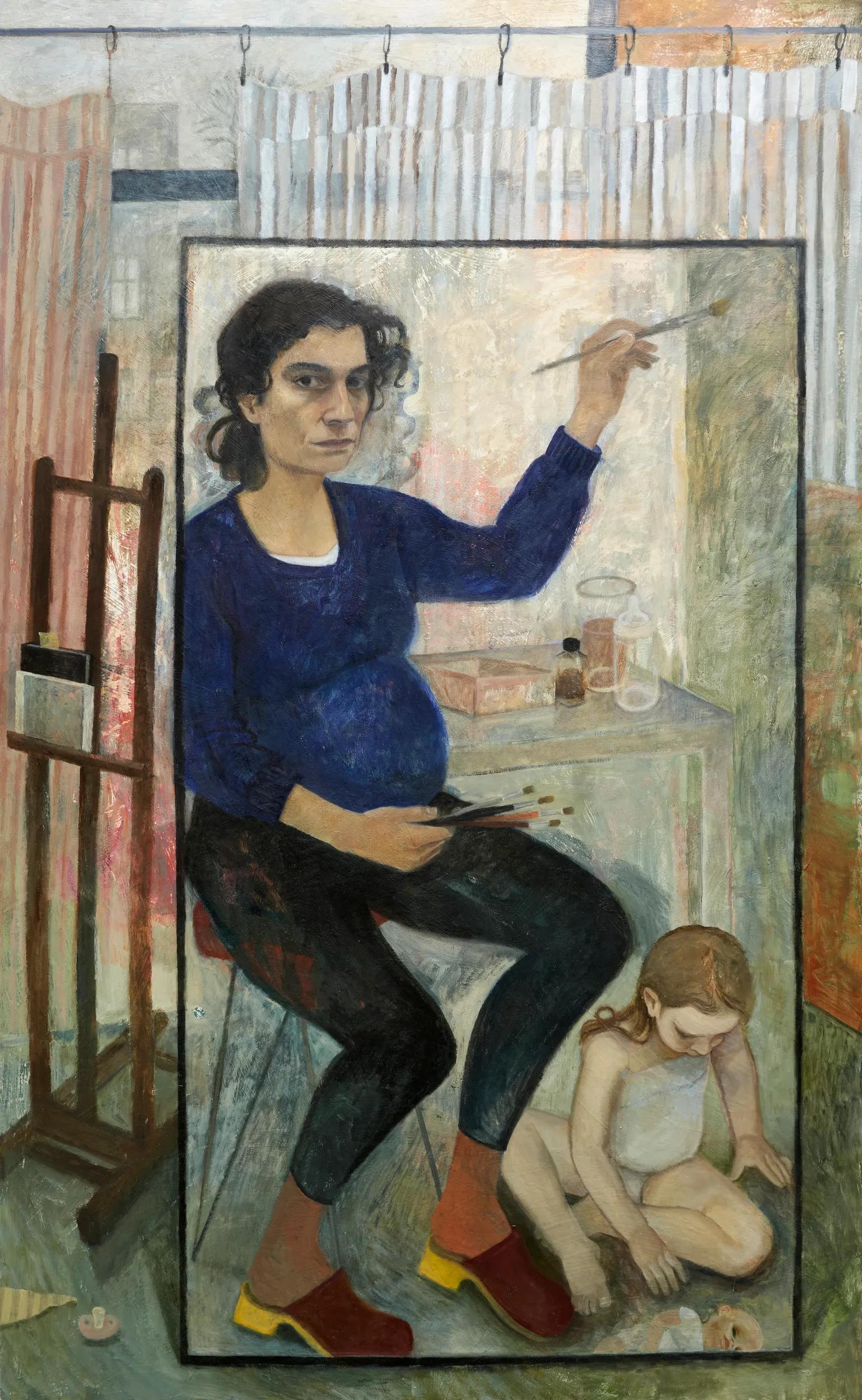
Nathanaëlle Herbelin, Manifestation pour une deuxième grossesse, 2025 – 2026 © Nathanaëlle Herbelin / ADAGP, Paris
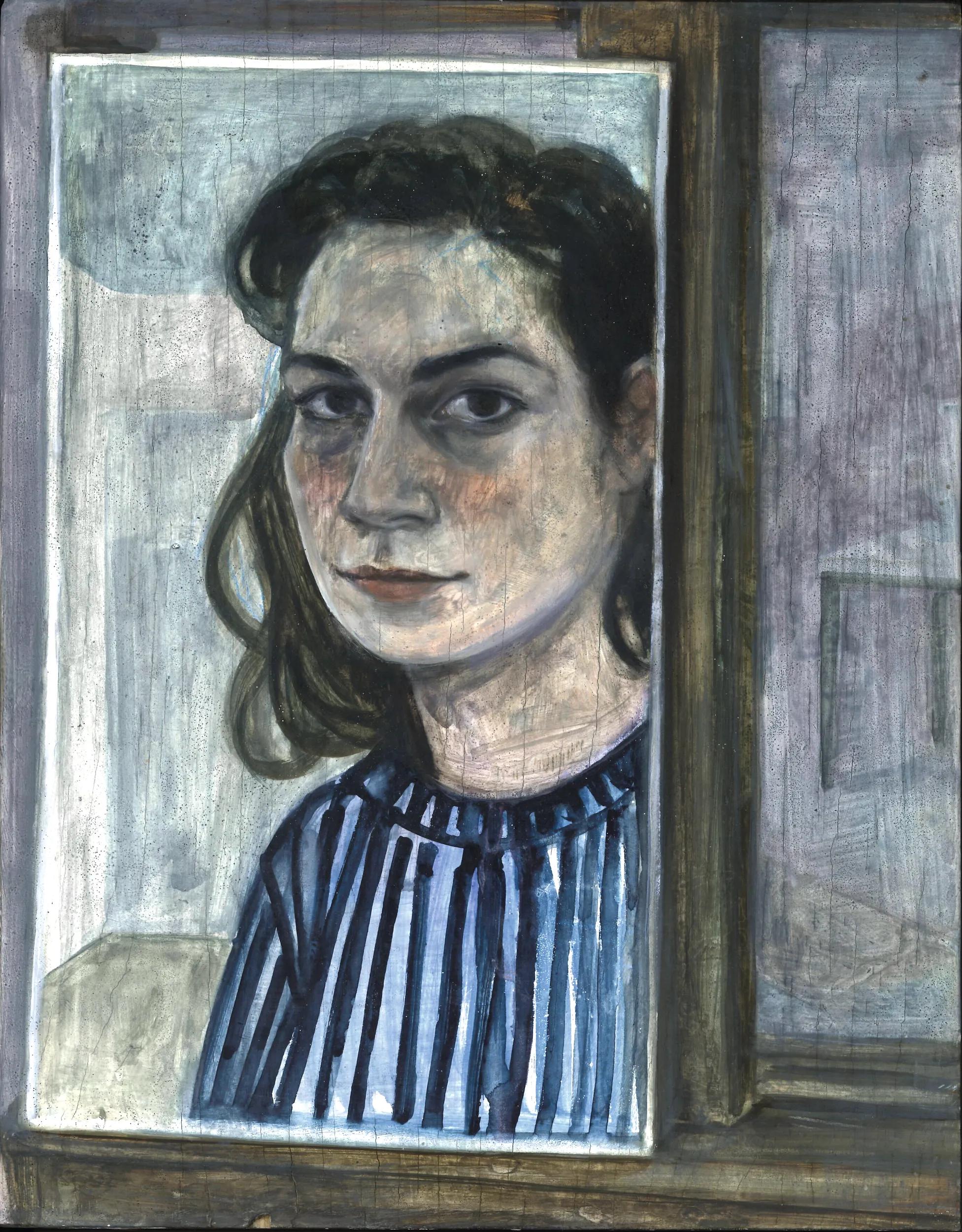
Nathanaëlle Herbelin, Autoportrait, 2018 © Nathanaëlle Herbelin / ADAGP, Paris
Herbelin allows each of her works to unfold spontaneously, revealing their evolution through physical traces. ‘I devour my subjects, drawing them directly with the paintbrush,’ she explains. ‘Sometimes, if it doesn’t work, I quickly change the canvas.’ For years, Herbelin gave compositions that she judged unsuccessful to her grandmother, subsequently receiving them back when her grandmother passed away. Herbelin began to rework these canvases, leaving phantom faces, animals and landscapes to emerge from beneath newer compositions as shadowy alternate narratives. ‘They are the traces of a pictorial process, of paths my thoughts have gone down, of things that have disappeared, or of past scars that subtly continue to exist,’ Herbelin says of these pentimenti, citing her love of the ghostly limbs and abandoned outlines in the work of Diego Velázquez, Hans Holbein the Younger and Jean-Auguste-Dominique Ingres. For Herbelin, making the process visible is a way of ‘welcoming the viewer’s gaze,’ placing herself in a position of unguarded vulnerability as she invites them to witness her own artistic evolution.
Despite the oneiric quality of Herbelin’s work, lived experience is at the heart of her practice. ‘I paint like a documentarian,’ she says. Her work has an expansive humanist and social dimension, exploring contemporary inequalities through her attention to the minutiae of everyday life. In her 2018 ‘Tentatives de positionnement’ (Attempts at a Stance) series, Herbelin offered a sensitive yet unvarnished account of her birth country Israel, weaving stories of social precarity and economic hardship into scenes of the Negev and Judean deserts. Depictions of Bedouin nomads and Eritrean migrants contain an inherent complexity, alluding to broader questions of belonging and migration that run throughout the artist’s work, while portraits of her Parisian neighbors intersect with wider sociological themes such as gender identity and disability. In every one of these scenes, Herbelin asks her viewers for a moment of undivided attention and deep contemplation, entering into a profound relationship with the subject.
Related News



1 / 5