

Conversations
Remembering What Matters
Manuela Wirth and Claudia Delgado on The Forgotten Her Story, a project for preserving women's creative legacies
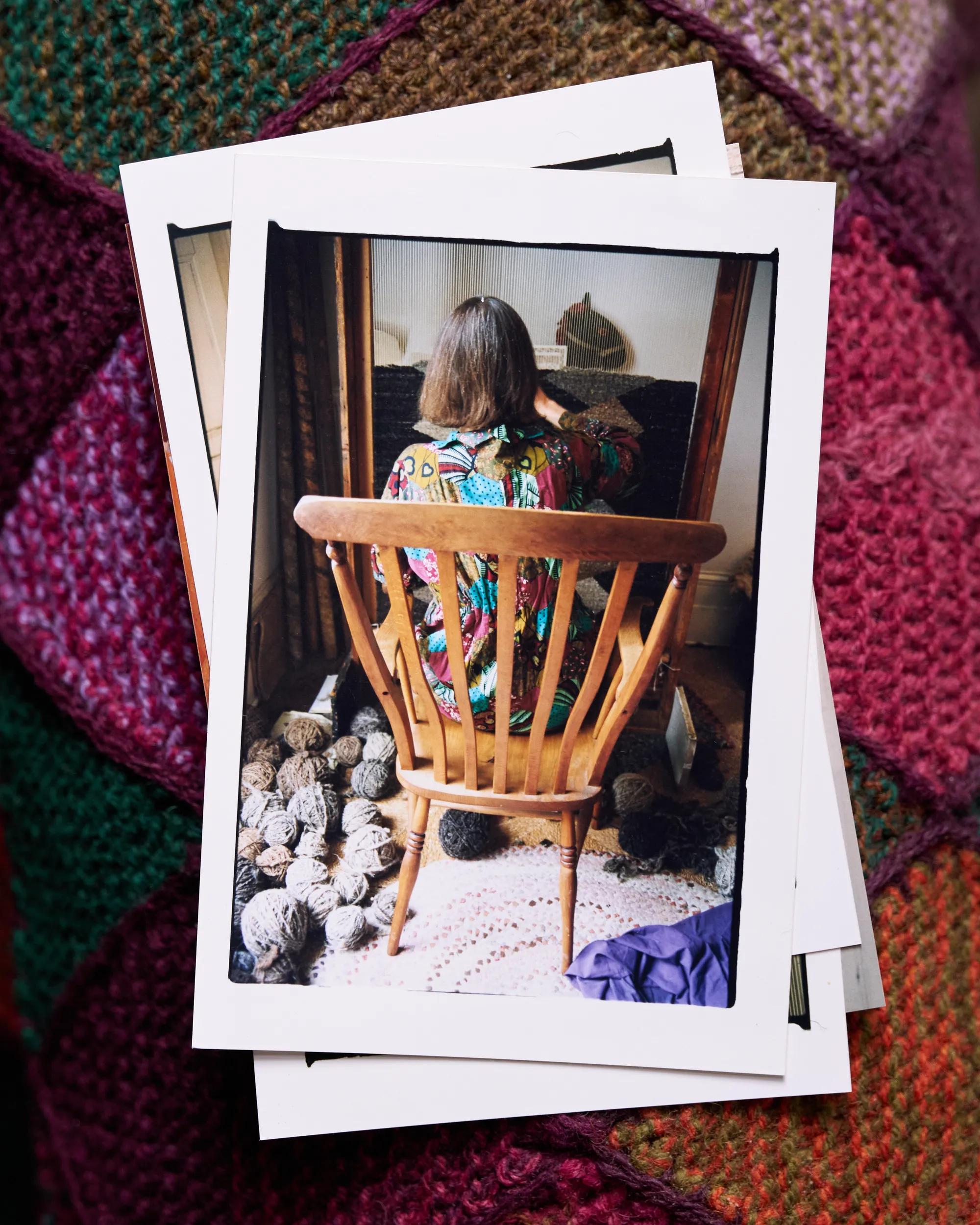
Rachel Scott weaving in her home. Photo: Cat Garcia
Launched in 2024 by Hauser & Wirth co-founder Manuela Wirth, The Forgotten Her Story began as an online platform celebrating the lives of remarkable creative women whose work and influence have often been overlooked. Through conversations with artists, makers, writers, dancers, collectors and those closest to them, the project traces lives shaped by creativity, craftsmanship and the passing of knowledge from one generation to the next.
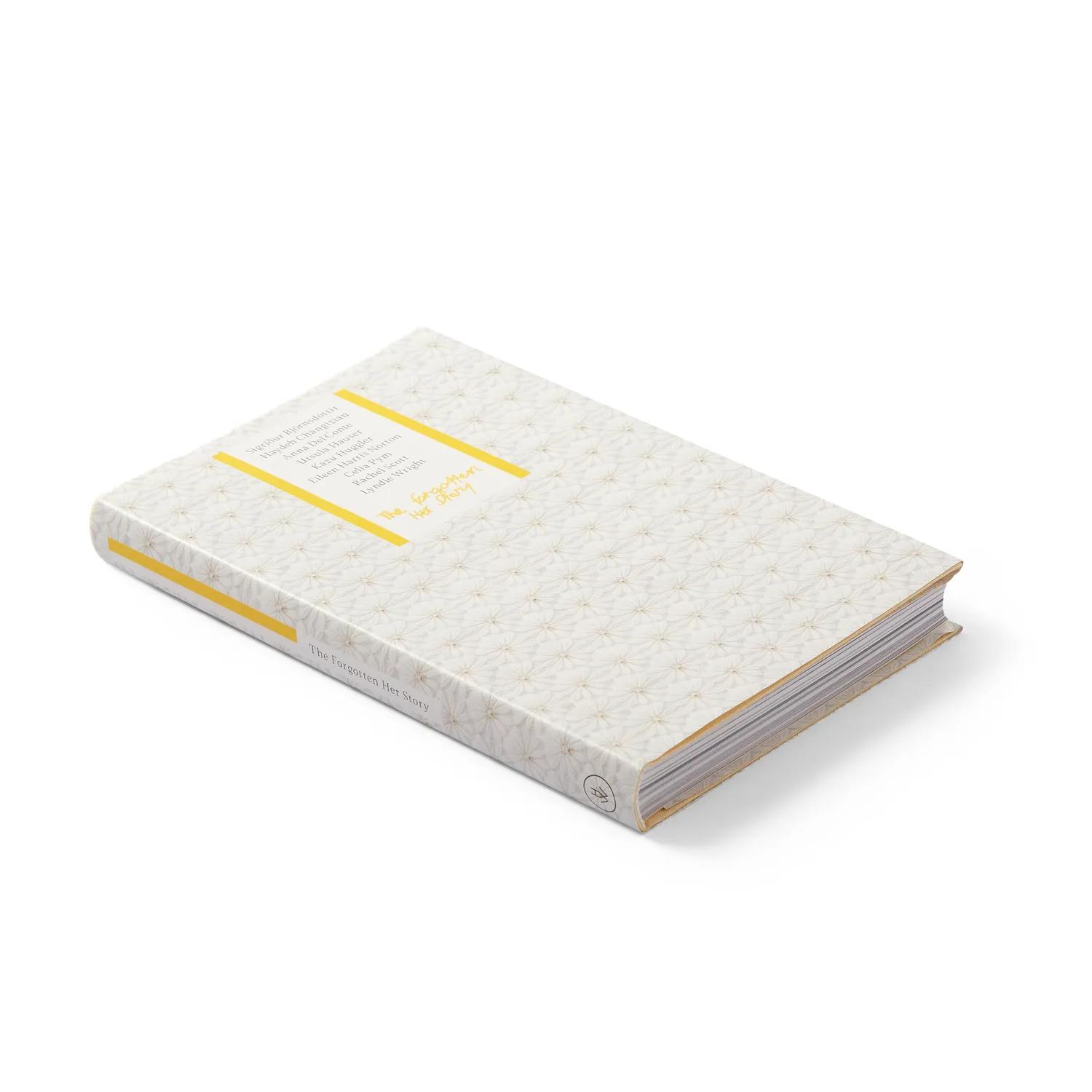
Now, The Forgotten Her Story comes to print for the first time. Bringing together nine richly illustrated profiles, the book pairs conversations with photographs, letters and personal ephemera to create intimate portraits of each woman's life and work. We spoke with Manuela Wirth and co-producer Claudia Delgado about the origins of the project, its journey into book form, and the stories that continue to shape its growing archive.
How did The Forgotten Her Story begin?
Manuela Wirth: It began through ongoing conversations with my friend Sonja Buholzer. We kept returning to the same thought: so many extraordinary women had created beautiful things or made a profound impact, yet remained largely unrecognized—some in the shadow of well-known men, others simply never seeking attention.
I remember sitting at my mother's old worktable, running my fingers over the worn wood where she had spent countless hours sewing, embroidering, knotting and crocheting for herself and us three children. I thought: if we don't hold on to these stories, they disappear, just like the traces of her hands over time. That was the moment The Forgotten Her Story was born—and it felt natural that the first story should be about her.
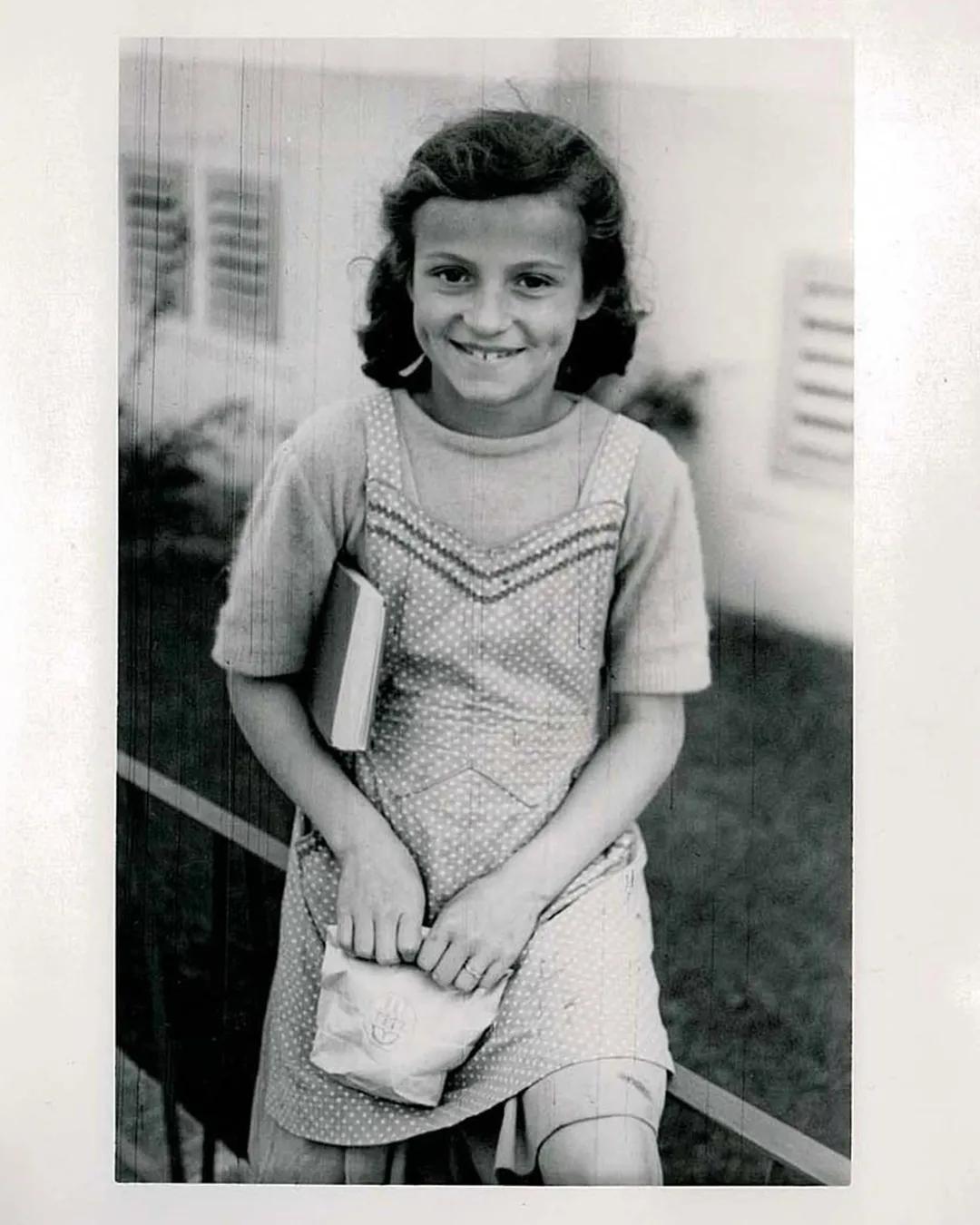
Ursula Hauser in an apron made by her mother © Ursula Hauser Archive
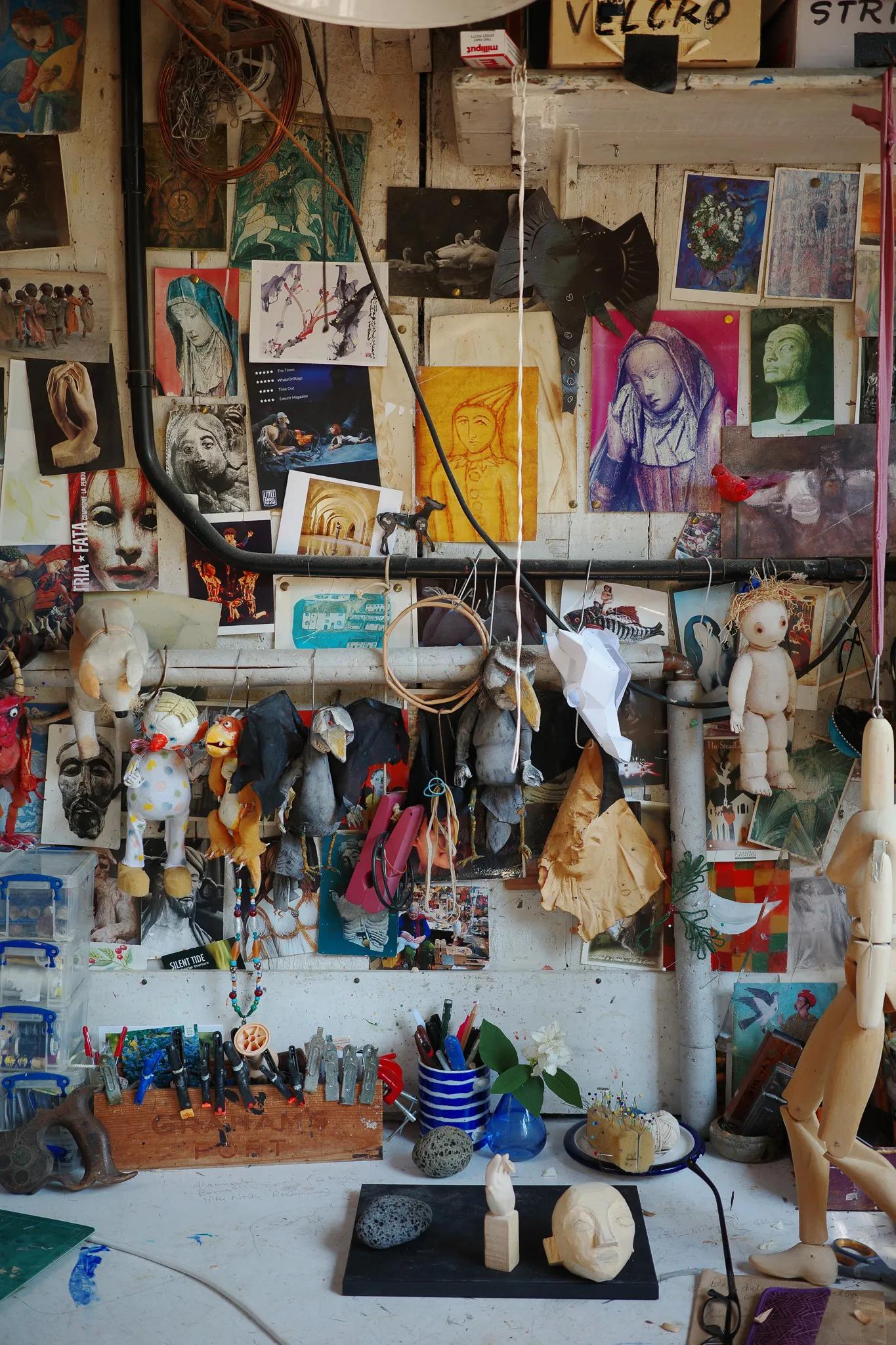
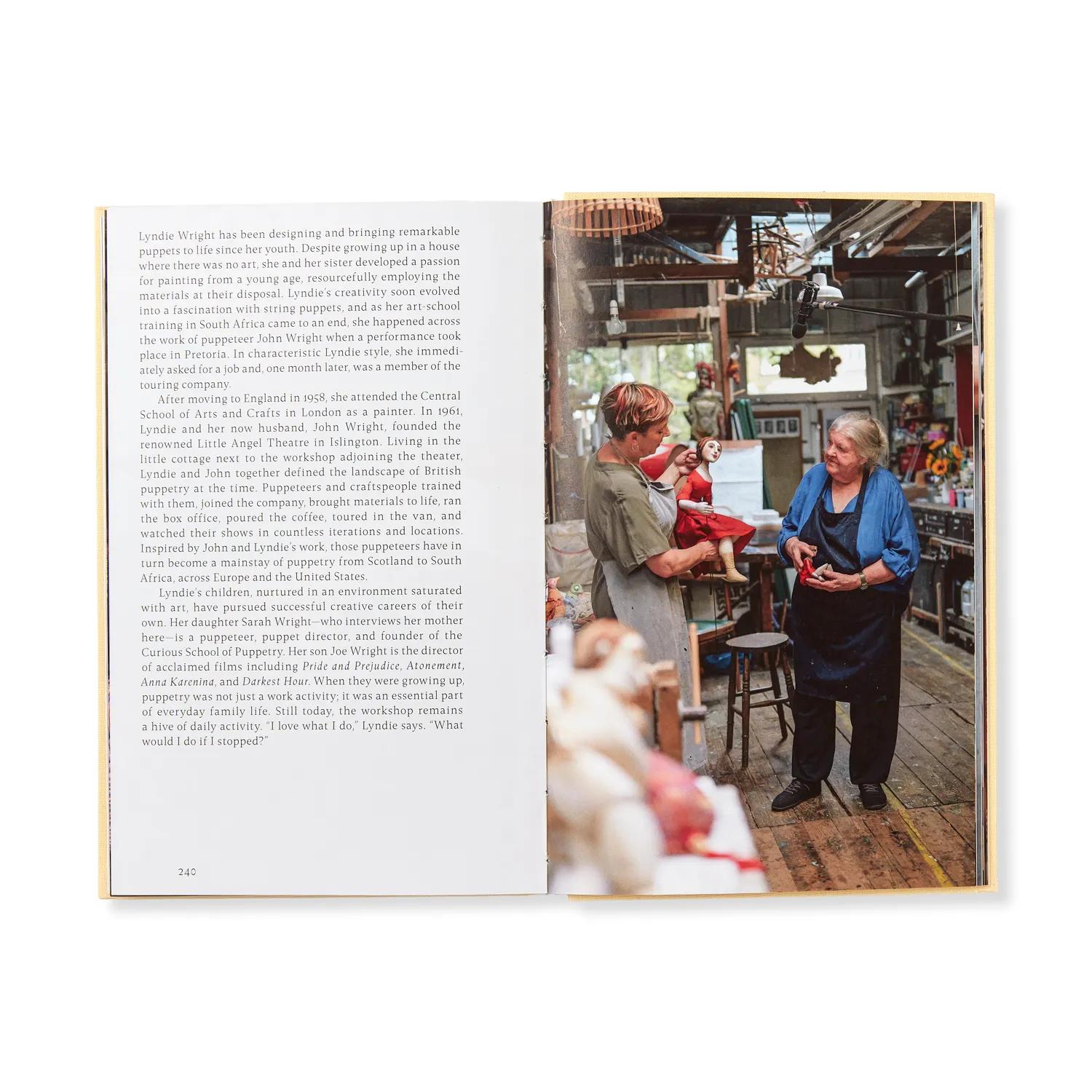
Inside master puppeteer Lyndie Wright’s workshop. Photo: Elena Bazu
Soon afterwards I met Claudia during our first film project with Lily Cole, who made the short film about my mother called The Mother and the Weaver. We realized immediately that we shared the same curiosity, and from that moment on the project became a true collaboration. Since then, every story has been a journey we've taken together—researching, traveling and filming, and spending hours listening to women and their families. It has never been about finding famous people. It has always been about taking the time to listen before these stories disappear.
We recently completed filming the story of the outsider artist Diana Francis, after her daughter Rachelle approached us and asked if we'd be interested in telling her mother's story. That is exactly what we hope The Forgotten Her Story can become: a trusted place where remarkable lives can be shared, celebrated and preserved for future generations.
Claudia Delgado: I remember the moment Manuela told me about her idea, and I fell in love with it instantly. I come from a family of women—my mother has five sisters—and I had just come back from years working with women in different communities: Samburu women in Kenya preserving their beadwork traditions, coffee growers in Ethiopia, frankincense harvesters in Somalia. The resilience and ingenuity of women carrying whole crafts and traditions on their shoulders while raising children was something I'd been quietly obsessed with for years.
Around the same time, I was reading Ursula K. Le Guin, who imagines a spaceship visiting Earth that can take only one exemplary human back to help understand our species—and makes the case for a wise old woman. The Forgotten Her Story feels like that spaceship: a way of gathering women who have actually lived, absorbed and enacted the whole of the human condition.
“It felt right that their stories should also exist as a carefully crafted object, something to treasure, revisit and eventually pass on.”—Manuela Wirth
What drew you to working together and how have your different perspectives shaped the stories you tell?
CD: It feels completely natural. The real work happens in the brainstorms—deciding who we portray, and how. Between us we carry a wide constellation of crafts, and it's endlessly interesting to watch how each of us is drawn to a different thread within the same story. After a session of deep listening with the woman we're portraying, we sit down and lay bare what moved us most, and why. That's where the alchemy happens—not in either perspective alone, but in the moment our two readings of a single conversation meet and reveal something neither of us could have arrived at alone.
MW: One of us might notice the wider cultural story; the other is drawn to the personal details—the family photographs, the conversations around the kitchen table, the objects kept for decades. We spend a great deal of time talking, questioning and listening, trying to understand not only what these women achieved, but who they are. That collaboration has become the heart of the project.
What inspired you to bring the project into book form?
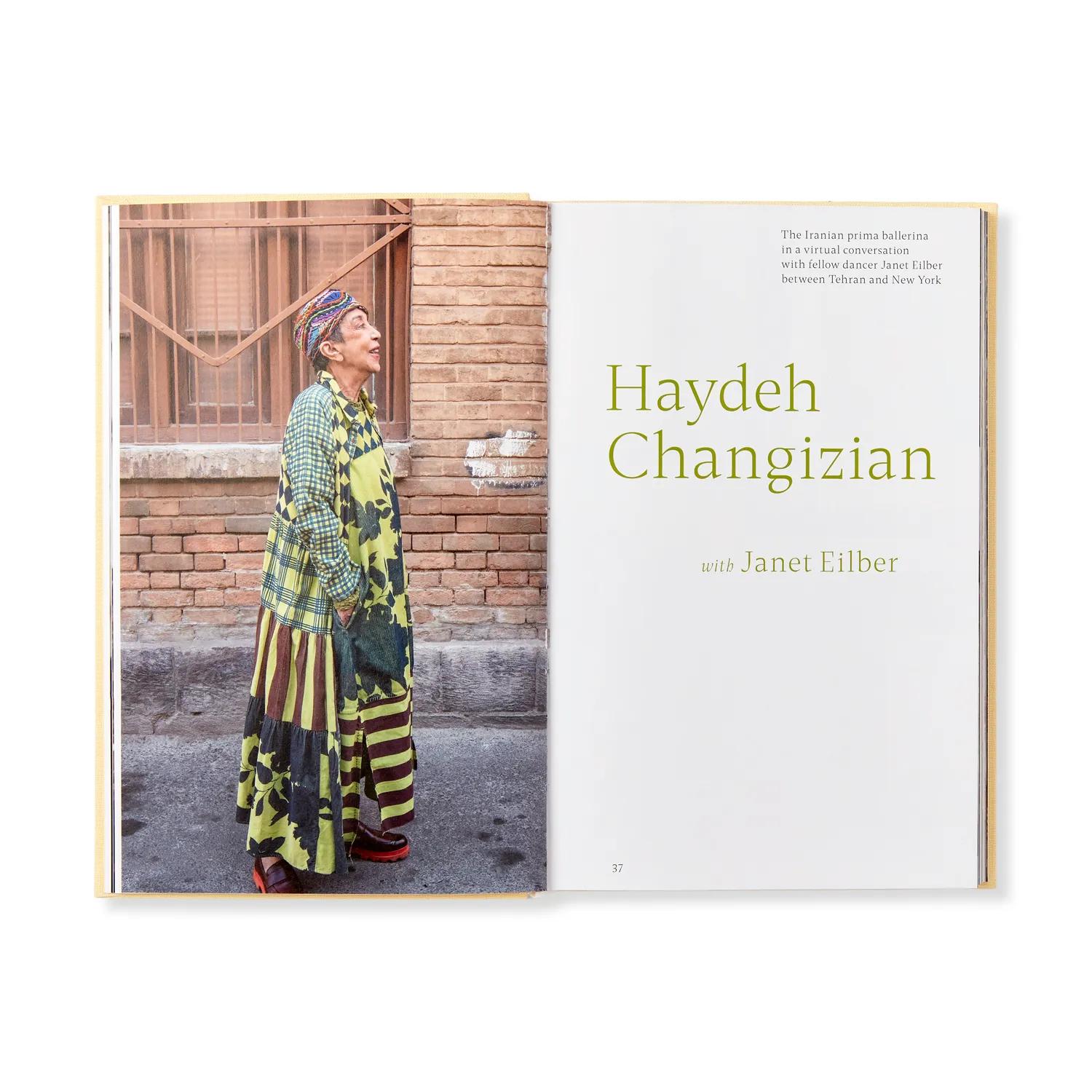
MW: The digital platform allows these stories to travel around the world—like the ballet dancer Haydeh Changizian, who has a fascinating Zoom conversation from her apartment in Tehran with Janet Eilber in New York. A book asks something different of us: it invites us to slow down. There's something special about holding it in your hands, turning the pages, discovering photographs and handwritten notes—it becomes a much more intimate experience. Many of the women we feature dedicated their lives to making things with their hands, so it felt right that their stories should also exist as a carefully crafted object, something to treasure, revisit and eventually pass on.
CD: A book has a survival capacity unlike almost anything else in history. Long after a hard drive fails or a platform disappears, a book endures—and in doing so, makes these histories immortal. There's something almost subversive in that, too. Throughout history, books—and the women who wrote or were written about in them—have been burned, censored, silenced. To put these women's lives into that same form, permanently, is to insist they can't be quietly erased the way so many women's stories have been before.
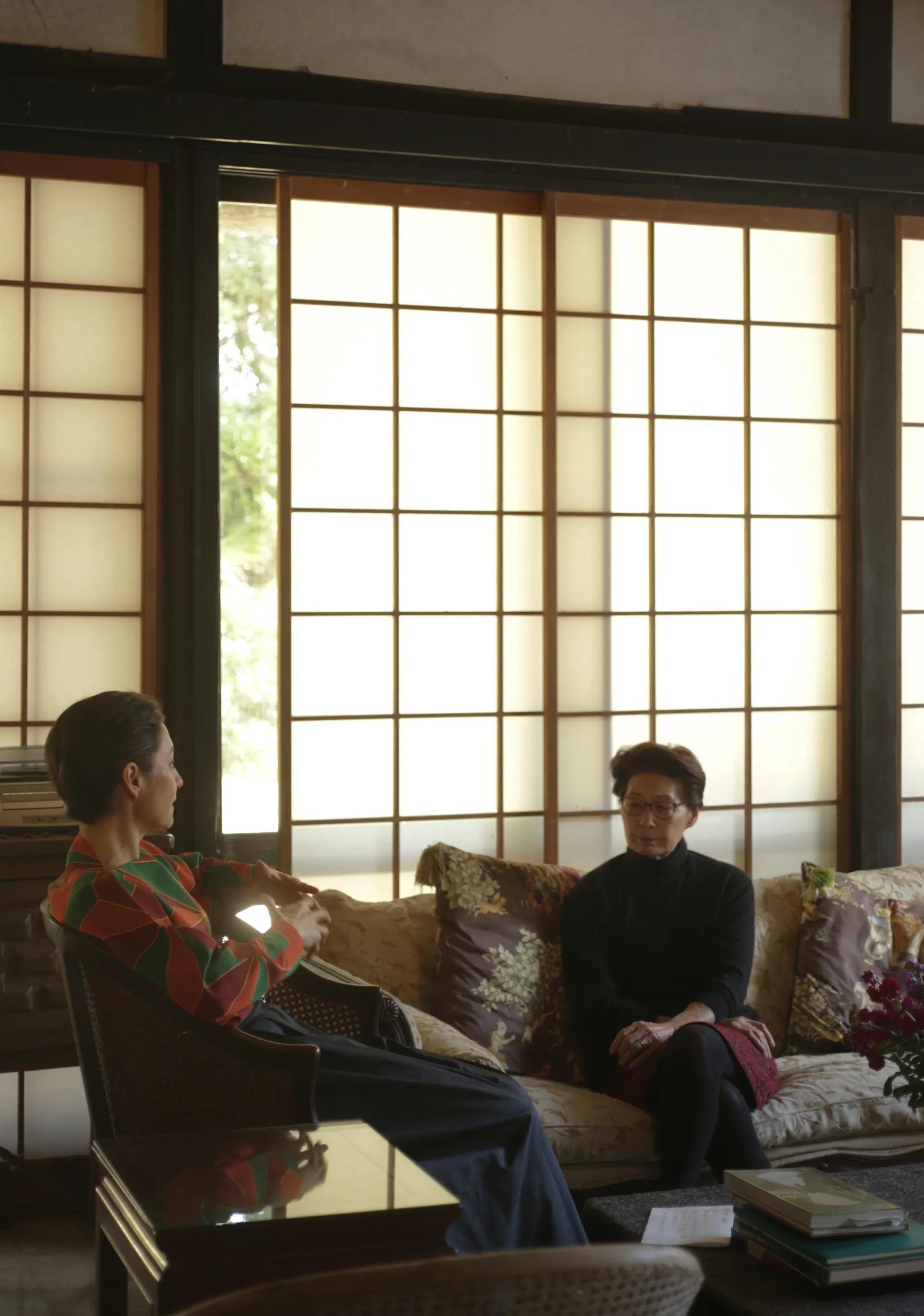
Kazu Huggler with her mother, Miwako Huggler-Yasuda. Photo: Maya Michiki
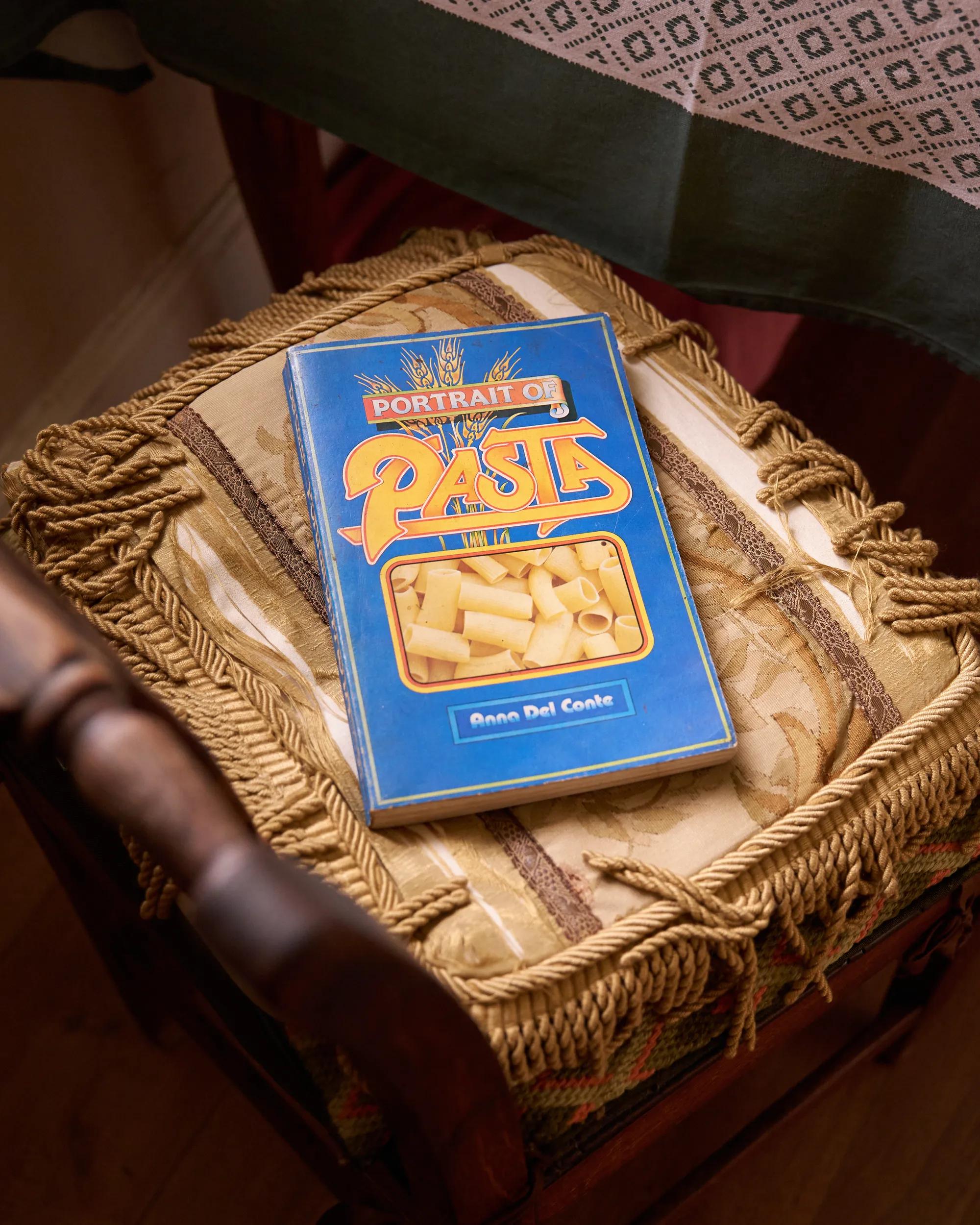
Portrait of Pasta (1976) by Anna Del Conte, the woman who brought Italian food to England. Photo: Cat Garcia
What patterns have emerged across these profiles? Are women's creative lives remembered—or overlooked—differently?
MW: What struck us most is how few of these women were looking for recognition. They simply kept making, teaching, nurturing and creating because that was who they were. Many worked quietly alongside families, communities or better-known partners, their lives documented through family albums and memories rather than institutional archives. Yet when you spend time with these stories, you realize their influence was enormous—it was simply measured differently.
CD: What strikes me most is their resilience, their ability to adapt—the sense that these women contain so many different lives within one. Their humility and generosity are what stay with us most. And there's something beautiful in how much knowledge passes down generation to generation, often without anyone naming it: a woman's instinct for a material, her whole approach to making, shaped by her mother or grandmother, sometimes without her even realizing it.
What connects the women in this book, across generations, disciplines and geographies?
MW: Curiosity. Every woman in this book remained curious throughout her life, learning and refining her craft regardless of age or recognition. They also share an extraordinary generosity—so many became teachers without ever calling themselves teachers, passing on knowledge and skills to daughters, students, neighbors and friends.
CD: Their work was never just about themselves—there's a kind of care built into what they do, whatever form it takes: caring for a craft, a family, a community, something worth passing on. The other thing we keep seeing is their capacity to reinvent themselves. Life asks something different at every stage—a marriage, a child, a political revolution, a move to a new country—and they find a new way to keep creating within it. That resilience isn't stubbornness, it's flexibility. They don't hold onto one version of themselves. They adapt, and they keep making, whatever shape that has to take.
“What we're really after is something a formal archive can never reach: the intimacy that only comes through memory, presence and trust.”—Claudia Delgado
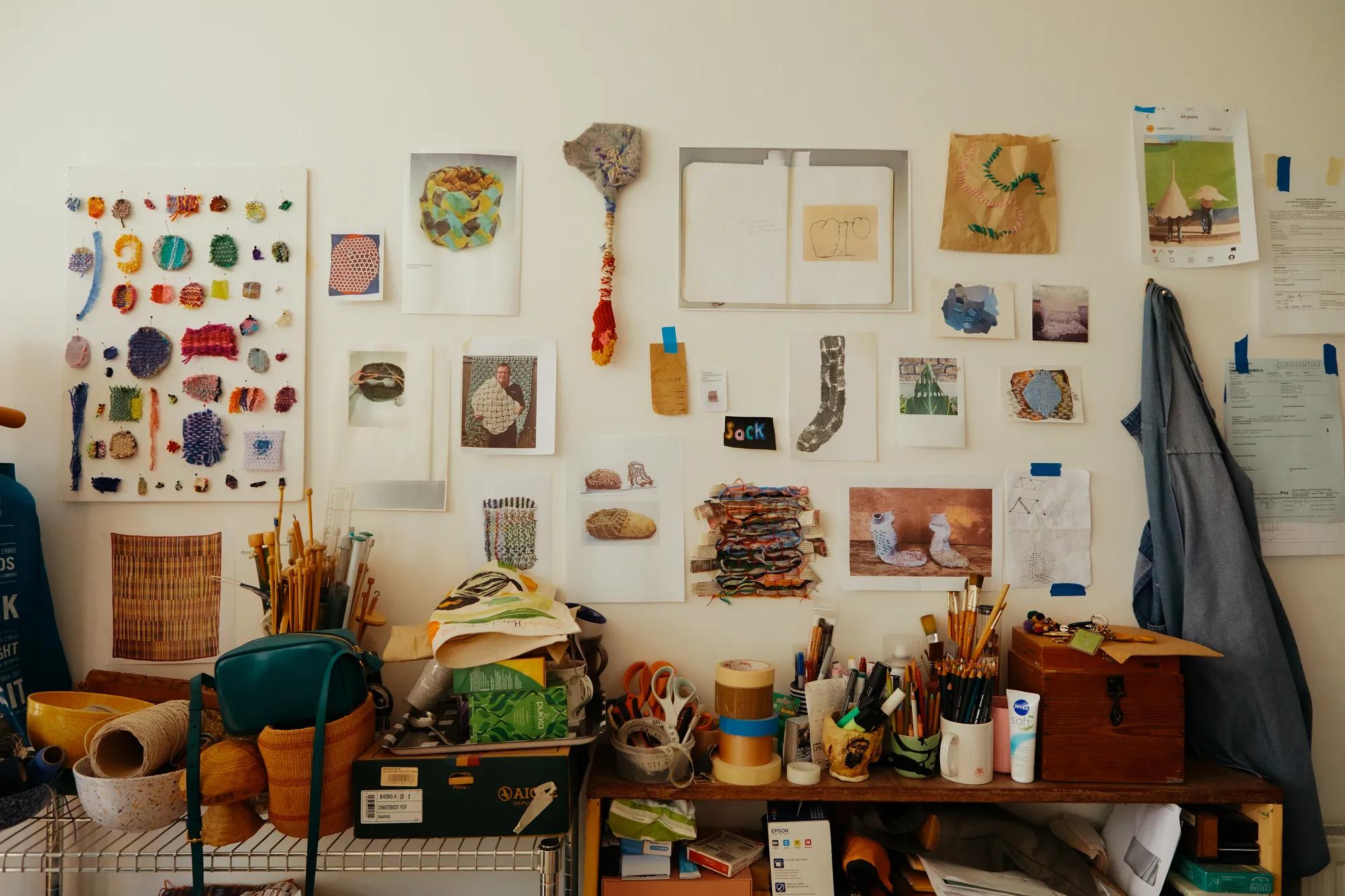
Inside Celia Pym’s London studio. Photo: Sarah Bates
How do you piece together a life when the historical record is incomplete?
CD: Every story is completely different, and most of these women aren't famous, so the research often starts from nothing. What we're really after is something a formal archive can never reach: the intimacy that only comes through memory, presence and trust. It's oral history—there's something powerful in capturing a conversation firsthand, the small details that build into a pattern only that person could give you. Sometimes the memories they share with us aren't even known by their own daughters or closest friends. It's mesmerizing to watch those discoveries happen in real time.
MW: The archive is only one part of the story. Often the richest material comes from conversations with daughters, grandchildren, neighbors and friends—a recipe book, a repaired dress, a favorite chair can reveal just as much as an official document. We don't try to create a perfect biography. We embrace the fragments, because they often tell us something deeper.
Where do you hope The Forgotten Her Story goes next?
MW: It feels very much like the beginning. We hope to keep traveling, meeting remarkable women in villages, cities, studios, kitchens and gardens—we're especially interested in those whose knowledge has been passed down through food, textiles, craft, music and ritual. There are so many stories still waiting to be discovered.
CD: What's been incredible lately is how the stories are starting to come to us as much as we go looking for them—people hear about the project and reach out, wanting their mother's or grandmother's story told. We have some exciting ones lined up already, from tapestry making to plant medicine. Our goal is simple: to reach as many crafts as we can before they disappear, and to keep growing this tapestry of women's creativity for as long as there are threads left to follow.
What has surprised you most since launching the project?
MW: The generosity. Families have opened their homes to us, shared private photographs and letters, and trusted us with deeply personal stories. Again and again, people have said, “Thank you for asking”—often, no one had ever taken the time to ask before. We've also been touched by how universal the response has been: readers see their own mothers, grandmothers and teachers in these women, which reminds us that while individual names may be forgotten, the lives they represent are shared by so many of us.
CD: There's a real community growing around this project now. People tell us they feel inspired to create again, that we've reminded them of their own mother or grandmother, that young women feel empowered knowing these women faced the same struggles they're facing now. But what moves me most is simpler than any of that: the power of capturing someone's story firsthand, while they're still here to see it received. So many of these women are being celebrated for the first time in their lives—not after, but while they're living, while they can feel it. That's what makes this work feel urgent.
—
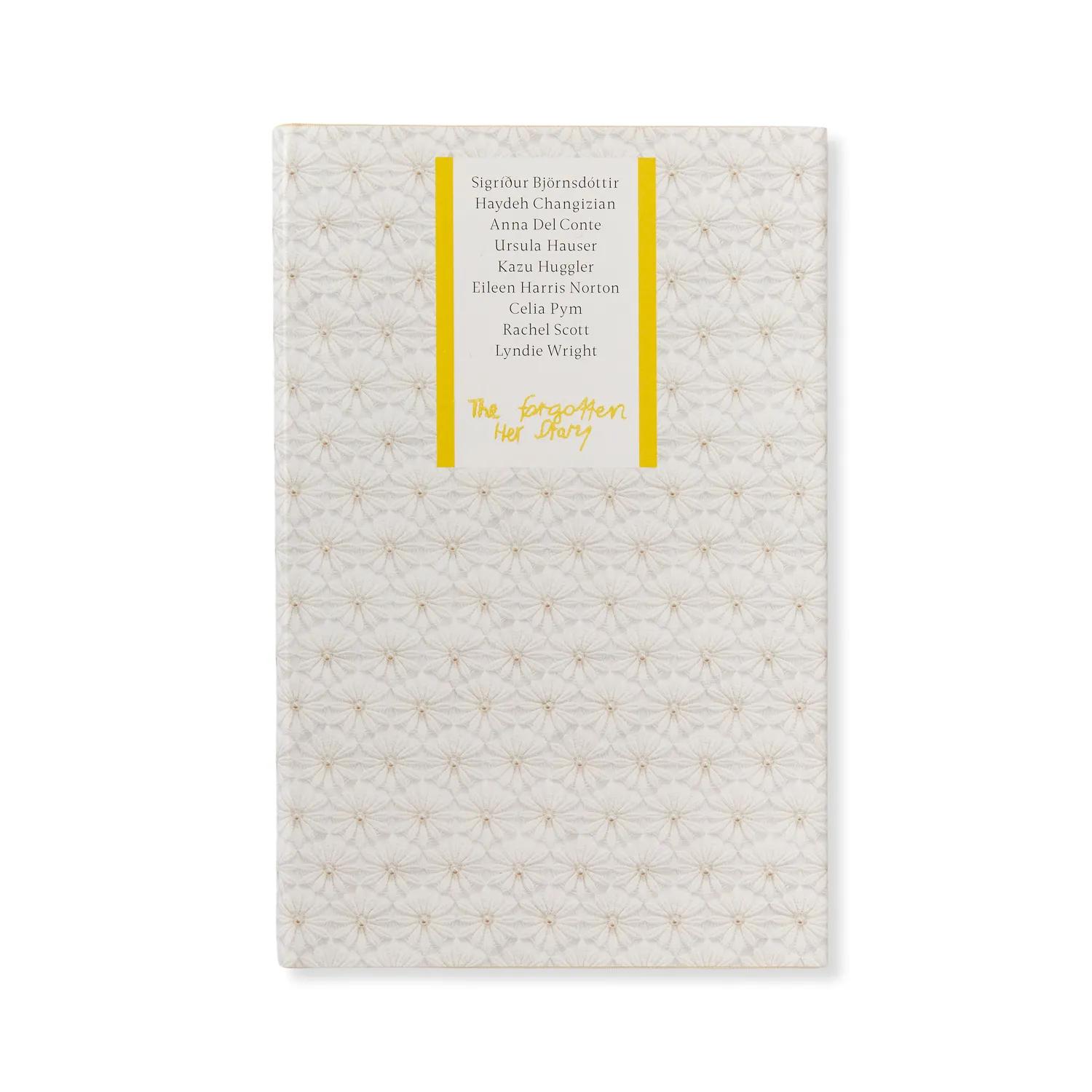
The Forgotten Her Story from Hauser & Wirth Publishers brings together nine extraordinary women's stories in a beautifully crafted clothbound volume. Among those featured are renowned cookery writer Anna Del Conte, textile artist and 'damage detective' Celia Pym, and ballet dancer Haydeh Changizian, one of Iran's first and only prima ballerinas.