

Diary
The Radar: La Serenissima
Artists Nairy Baghramian, Berlinde De Bruyckere, William Kentridge and Zeng Fanzhi on memorable encounters with art in Venice
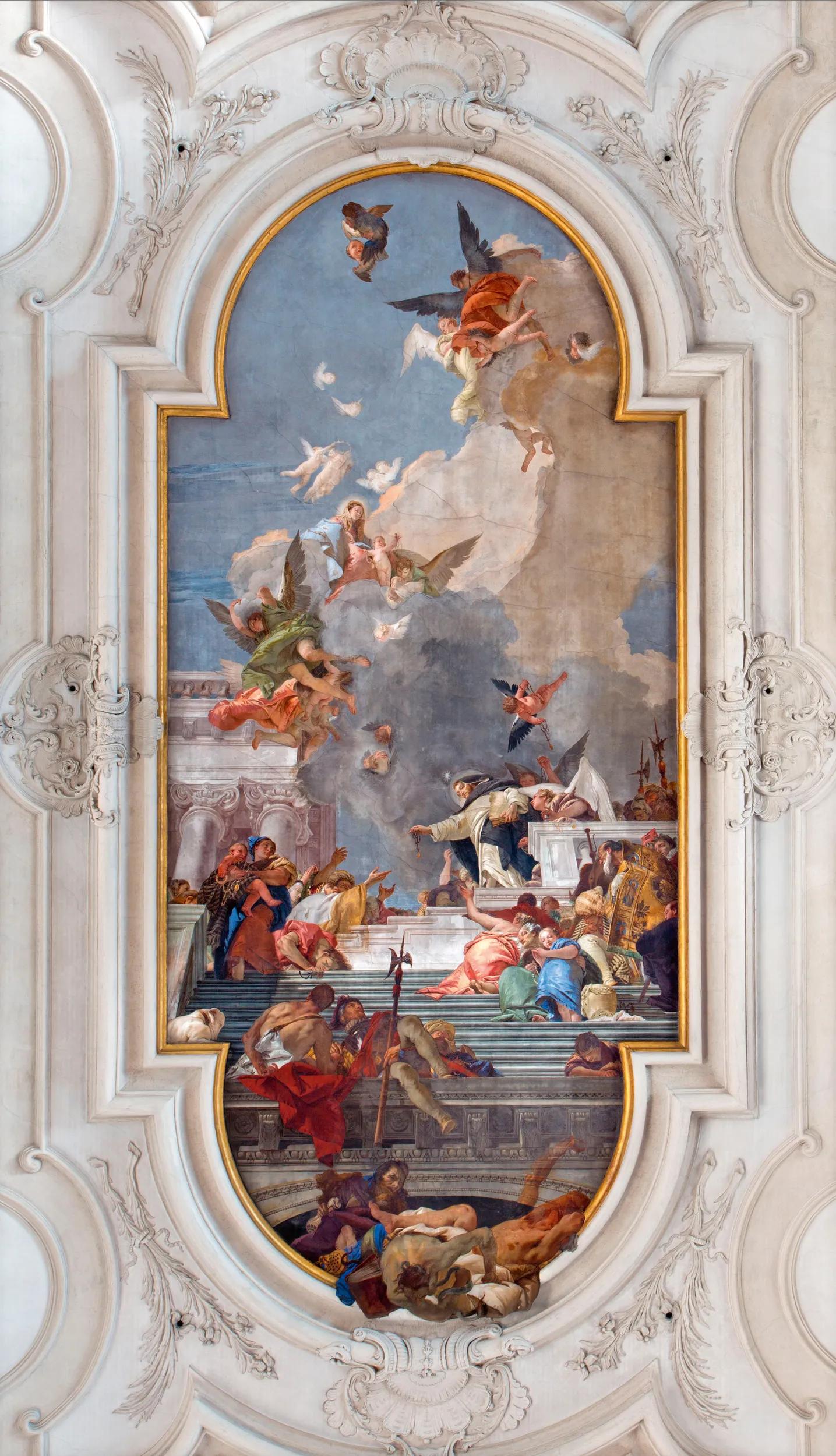
Gimbattista Tiepolo, The Institution of the Holy Rosary (detail), 1737–39. Fresco, nave ceiling. Photo: Jozef Sedmak / Alamy
- 5 May 2026
- Issue 17
In this special edition of The Radar—Ursula’s uncommon cultural recommendations from our friends and colleagues around the world—artists Nairy Baghramian, Berlinde De Bruyckere, William Kentridge and Zeng Fanzhi share some of their most memorable encounters with art over the years in Venice, on the occasion of La Biennale di Venezia 2026.
Nairy Baghramian
During the Biennale, when Venice becomes an intense site of contemporary artistic production, it can be revealing to briefly leave the city center. A short excursion to Possagno, an hour’s drive inland, leads one to the Gypsotheca Antonio Canova, where the plaster casts from Canova’s studio are preserved within a wing built by Carlo Scarpa. The architecture does not simply contain the casts; it constructs a field of relations between material and form in which the status of the plaster model—caught somewhere between process and finished work—becomes legible. The model of Pauline Bonaparte as Venus Victrix exemplifies this suspended condition, between conception, translation and liberation.
Experienced within the framework of the Biennale, such an encounter shifts our understanding of the relationship between historical and contemporary practices. The visit does not serve as a return to a fixed point of departure but as a displacement that reveals how artistic languages circulate across time through processes of mediation, translation and display. Returning to Venice after this excursion, the works of earlier masters—such as Bellini, Titian, Tintoretto, Tiepolo and Veronese—can be understood as operative nodes within this extended historical field, rather than as isolated monuments.
Scarpa’s other work in Venice extends this relational field, from the Olivetti Showroom in Piazza San Marco and the Fondazione Querini Stampalia to the Aula Baratto at Ca’ Foscari; and displays at the Gallerie dell’Accademia and Museo Correr to the Monument to the Partisan Woman in the Giardini della Biennale and the Tomba Capovilla on San Michele. Beyond the city, the Brion Tomb at San Vito d’Altivole offers another configuration of these concerns.
In this sense, the excursion is less about revisiting the past than about tracing connections. Biennales themselves operate through these relational confluences—linking works, sites, temporalities and discourses. Venice, with its dense stratification of artistic and architectural interventions, provides a conceptual framework in which these constellations can emerge.
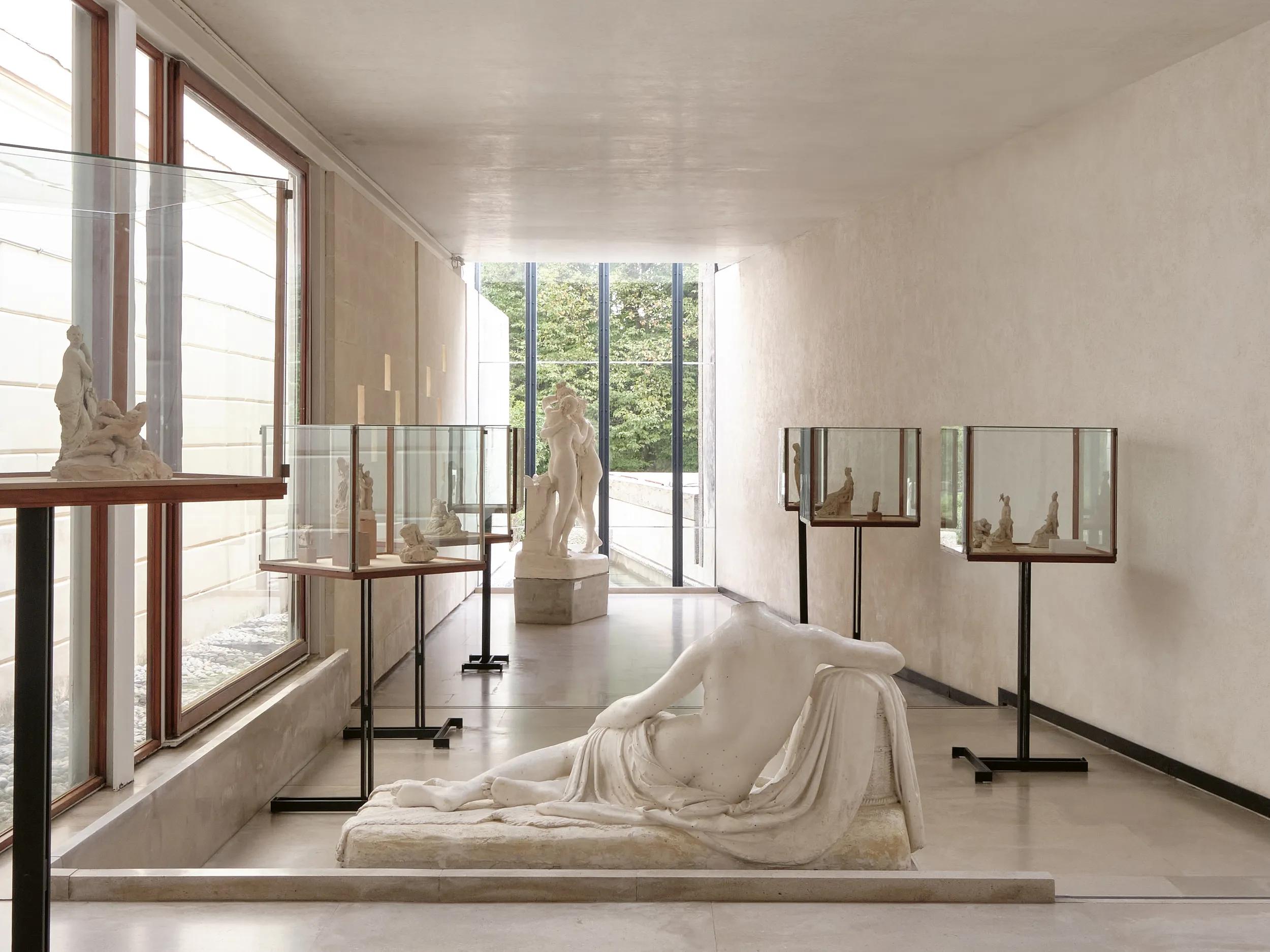
Interior view of the Scarpa wing, Museo Gypsotheca Antonio Canova, Possagno, Italy. Photo: Lino Zanesco, Courtesy Museo Gypsotheca Antonio Canova, Possagno
Berlinde De Bruyckere
The first time I visited the Scuola di San Giorgio degli Schiavoni, I found myself wandering—tourist map in hand—the quiet streets of Castello, bathing in the bright Venetian sunlight, searching for this hidden treasure. The contrast between the blinding light outside and the darkness inside the Scuola was dazzling. The frieze with paintings by Vittore Carpaccio depicting the life of San Giorgio was barely illuminated and revealed itself only gradually. For me, the highlight of this masterly painting is the panel that depicts San Giorgio slaying the dragon. What struck me was the long spear that pierces the dragon’s mouth, cutting diagonally across the frame. The nearly folded wings of the unusually small dragon stand in stark contrast to the flowing mane and elegant movement of the monumental horse before it. More than ten years later, during my exhibition “City of Refuge III” at the Basilica di San Giorgio Maggiore, as part of the 2024 Biennale, the same dragon slayer accompanied me in the form of the version of the scene painted by Carpaccio for the basilica in 1516.
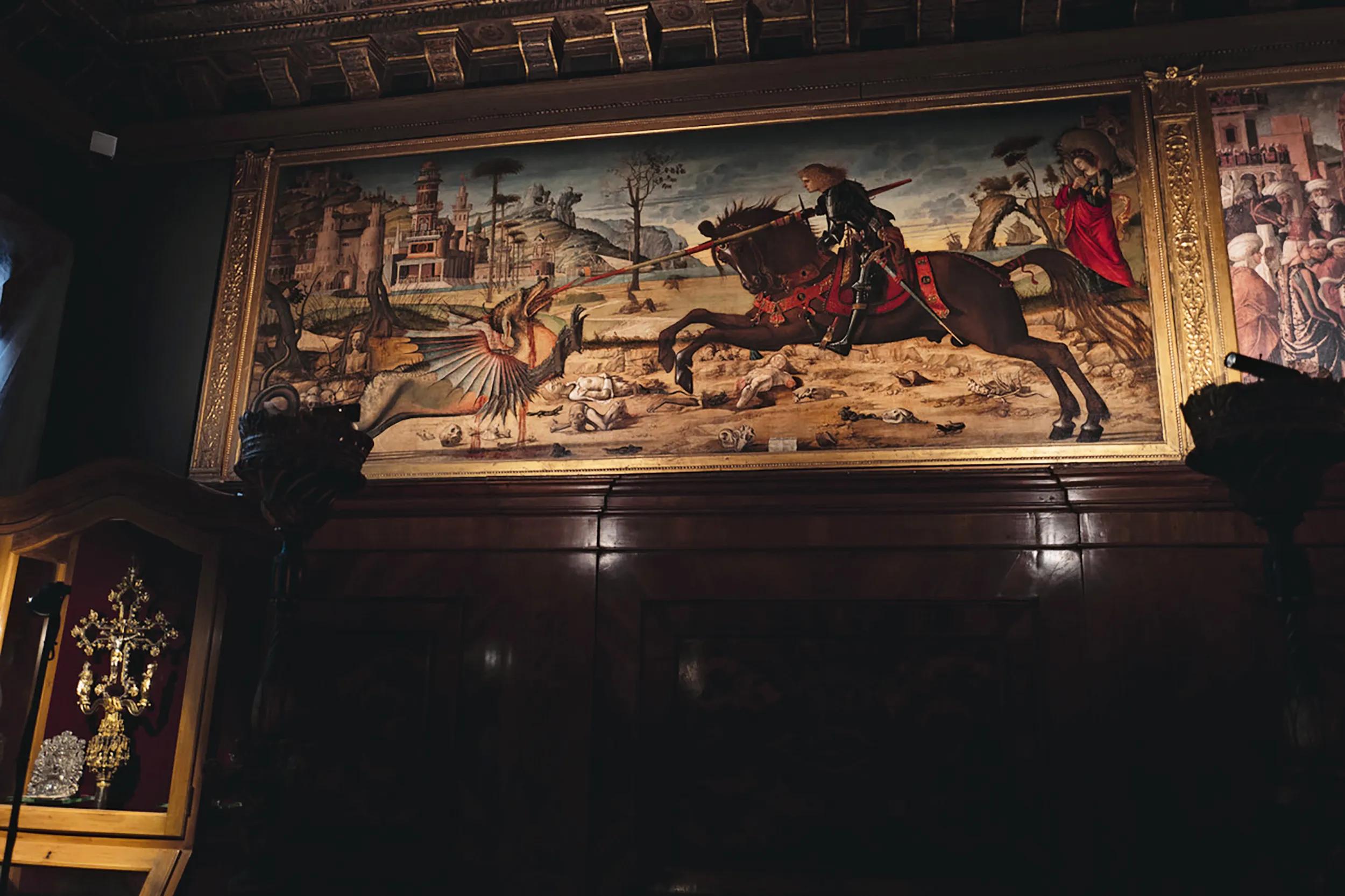
Interior of the Scuola di San Giorgio degli Schiavoni with works by Vittore Carpaccio. Photo: Mirjam Devriendt
William Kentridge
Whenever I am in Venice I always visit a painting by Giambattista Tiepolo on the ceiling of the church of Santa Maria del Rosario, commonly known as I Gesuati. The painting depicts the Virgin Mary and the Christ Child presenting a rosary to Saint Dominic. It begins at the top of the side wall, where people are perched vertiginously on a steep flight of stairs leading up to heaven. The figures—saints, patrons—either look up to the Virgin and heaven in the middle of the ceiling or down at us, the worshipers or tourists below.
To see the image, you have to tilt your head all the way back, and it is not obvious where to stand to view it properly. There’s no comforting horizon line, no spirit level for the eye, and the tilt of the head only deepens the disorientation. The balancing tubes in our inner ear are disturbed; it is unclear what is up or down. Attempts to fix the perspective leaves us still unmoored.
To help viewers, the church provides a small mirror in a gold stucco frame, mounted on wheels in the central nave. Instead of looking up at the ceiling, you can look down into the mirror and see the whole composition compressed there. The ambiguities are resolved. Questions of perspective or viewing angle solve themselves. You can see the other, wrong perspective simply by moving around the mirror, without having to walk through the pews and the side chapels. The mirror works like reversed binoculars, compressing and simplifying. Looking up again, we are admitted into the much stranger world of the painting.
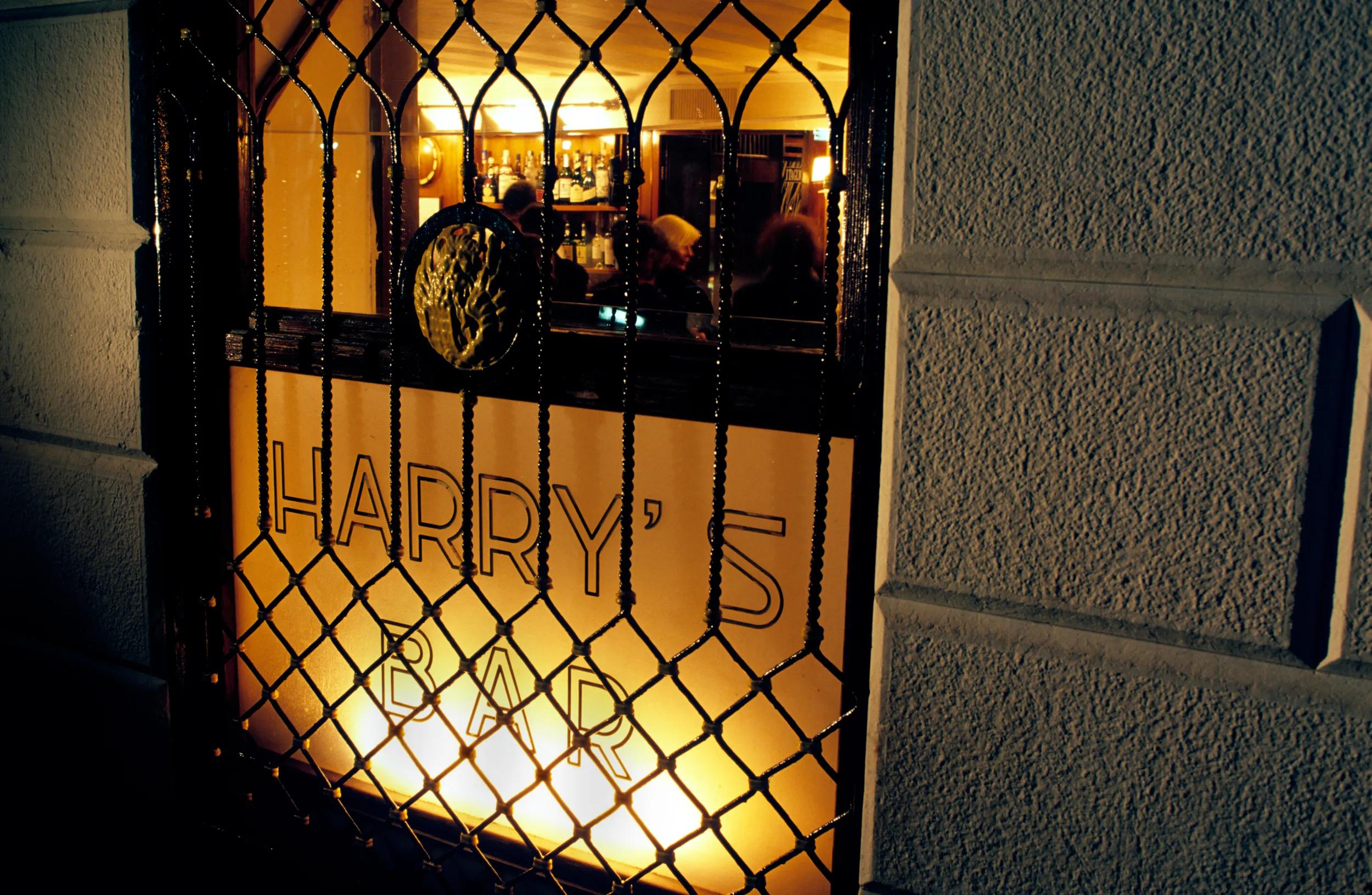
Harry’s Bar, Venice. Photo: Ian Shaw / Alamy
Zeng Fanzhi
Whenever I am in Venice I visit the Punta della Dogana. In 2009, a renovation by Japanese architect Tadao Ando added concrete—a modern, industrial material—to the existing brick-and-timber structure, transforming this 17th-century heritage site into a contemporary exhibition space. This confluence of different materials, periods of time and design concepts opens up new lines of thinking for the curators. The annual program in the space features a diverse range of artists and artworks. My friends and I are always struck by the quality and innovation of the exhibitions; a visit always inspires and refreshes me. As an Asian artist, I feel honored to have had my work exhibited in this luminous space, and I cherish the experience.
Beyond the art, one of my favorite places to go in Venice is Harry’s Bar, which is tucked away near St. Mark’s Square. It draws many travelers who, after a day of sightseeing, wander through the alleyways from the square to seek out the bar. There are two floors and I like to sit upstairs in a corner by the windows. I order a Bellini, the bar’s signature cocktail, and a grilled artichoke and gaze out at St. Mark’s Square and the Adriatic. During the Biennale, Harry’s becomes a gathering place for artists, curators and other art professionals. Sitting here, amid the art crowd, one can truly feel the diversity of art and see how art and life intertwine and enhance each other.